1925: How did Shalimar enter the history of perfumery?

Some perfumes define an era. Others become its very symbols. Shalimar by Guerlain belongs to this latter category. Created in 1925 by Jacques Guerlain, the fragrance reached the rare milestone of one hundred years old in 2025, without becoming a mere museum piece. On the contrary, Guerlain continues to present it as one of the cornerstones of its heritage and as the first amber perfume in history.
A century after its creation, Shalimar remains instantly associated with a few key elements: the freshness of bergamot, the sensuality of vanilla, the velvety texture ofiris, the warmth of tonka bean, and that ambery depth that helped redefine modern perfumery. But to reduce Shalimar to its olfactory pyramid would be to miss the point entirely.
Its extraordinary longevity is also due to a brand narrative, a bottle that is recognizable above all others, the know-how of the House of Guerlain and a remarkable ability to evolve an icon without erasing its identity.
To understand Shalimar Guerlain, one must go back to Paris in 1925. That year, the capital hosted the International Exhibition of Decorative and Industrial Arts . The event took place from April 28 to November 30 around Les Invalides, the banks of the Seine, the Grand Palais , and the Petit Palais. Twenty-one countries participated, and the decorative arts, fashion, furniture,architecture and luxury goods occupied a central place.
The context is ideal for a creation that rejects discretion. The 1920s celebrated geometric lines, contrasts, precious materials, and a new conception of elegance. Objects became symbols of modernity.
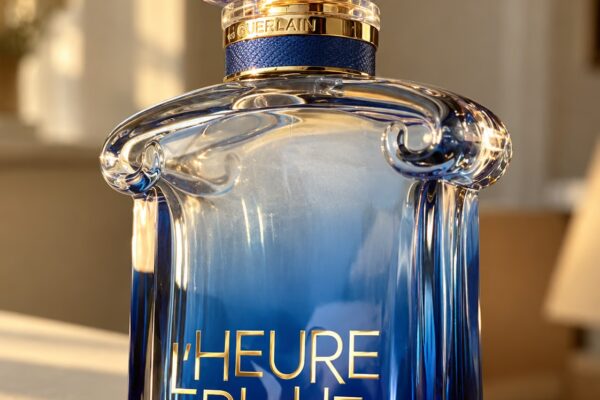
It was in this atmosphere that Jacques Guerlain introduced Shalimar. The House of Guerlain, founded in 1828, already boasted nearly a century of perfumery expertise. Jacques Guerlain had already created several major fragrances, including L'Heure Bleue in 1912 and Mitsouko in 1919. With Shalimar, however, he would explore a different territory. Guerlain now presents the 1925 creation as its first amber fragrance and as one of the foundational works of its olfactory vocabulary.
To place this creation in the broader history of the House, Luxe Daily also dedicates a page to Guerlain and its collections.
Shalimar and the Mughal gardens: between official history and the power of narrative
It's impossible to discuss Shalimar without mentioning its mythology. In the official narrative developed by Guerlain, Jacques Guerlain drew his inspiration from the story of the Mughal emperor Shah Jahan and Mumtaz Mahal. The Shalimar gardens thus become the symbolic setting for a love story, before the Taj Mahal further perpetuates the princess's memory in the narrative. Guerlain presents the name "Shalimar" as meaning "temple of love."
However, an important distinction must be maintained here: we are dealing with the official storytelling of the House, built around a romantic history and imagery. It is precisely this distinction that makes the subject interesting.
Luxury never sells just a material or a function. It constructs a mental territory.
Shalimar thus evokes gardens, water, night, love, sensuality, fabrics, and a certain representation of the exotic, characteristic of early 20th-century Western imaginations. This cultural vocabulary must now be viewed with more perspective, but it remains essential for understanding the perfume's heritage.
Guerlain's strength lies in having progressively shifted the narrative: the contemporary icon is based less on a literal representation of the Orient than on the art of perfume, materials, emotion and know-how.
Why did Shalimar revolutionize olfactory codes?
Shalimar's importance lies not only in its history. Its true revolution resides in the bottle and, above all, in the fragrance itself. Guerlain describes Shalimar as the first amber perfume in history. Its composition contrasts a luminous opening with a warm, balsamic, and vanilla-like base.
This contrast gives it a tension that can still be found today in many contemporary creations.
Bergamot: light before sensuality
Shalimar's opening is dominated by bergamot and floral notes. This freshness plays an architectural role, preventing the amber accord from becoming immediately heavy or uniform.
Bergamot brings a form of light.
It primarily prepares the contrast with the notes that will appear later: iris, jasmine, rose, vanilla, and tonka bean. Guerlain officially describes this sequence in the current composition of the Eau de Parfum.
Iris, jasmine and rose: the elegant heart of Shalimar
The floral heart is fundamental to understanding why the Shalimar perfume is not simply a vanilla fragrance.
Theiris introduces a powdery, almost tactile dimension. Jasmine brings sensuality, while the rose structures the floral femininity of the whole.
These notes create a transition between the freshness of the opening and the warmth of the base.
Shalimar therefore does not function as a succession of isolated notes. It is based on tensions: freshness and warmth, light and depth, flowers and balms, elegance and voluptuousness.
Vanilla and tonka bean: the signature that stays in the memory
Then comes the most immediately recognizable part: the base. Vanilla, balsamic notes, and tonka bean give the fragrance its warmth, its breadth, and much of its emotional power. Guerlain links these materials to its famous Guerlinade, the House's signature scent.
Yet Shalimar vanilla is not simply a sweet treat.
It can become smoky, leathery, enveloping, or almost dark depending on the concentration, the skin, and the stage of the fragrance's evolution. It is this complexity that explains why Shalimar continues to appeal to enthusiasts accustomed to much more contemporary creations.
The Guerlinade: understanding the olfactory DNA of Guerlain
The word Guerlinade comes up frequently when Shalimar is mentioned.
It refers to the olfactory signature historically associated with the House: a vocabulary that notably includes bergamot, rose, jasmine, iris, vanilla, and tonka bean. Guerlain still cites these six ingredients when describing this signature accord. Shalimar is one of its most famous expressions.
This concept is important because it explains how a perfume house builds an identity over several generations. Just as a fashion label has its cuts, colors, or patterns, a perfumer has accords and materials that reappear from one creation to the next.
In Shalimar, this identity reaches a form of maximum concentration: the fragrance is recognizable even before one can precisely explain what one smells.
The Shalimar bottle: when perfume becomes an object of art

A cult fragrance never lives only on the skin. It also exists in space.
The Shalimar bottle, designed by Raymond Guerlain, has become almost as famous as the fragrance it contains. Guerlain explains that its curves are inspired by the basins in the Shalimar Gardens and that its blue stopper evokes their fountains. The House also presents this stemmed bottle as a technical feat for its time.
LVMH specifies that the original bottle rests on a pedestal and is topped with a sapphire blue crystal stopper by Baccarat. This is the very essence of luxury: the packaging enhances the product.
The bottle's silhouette acts almost like a three-dimensional logo. Even without reading its name, the enthusiast recognizes Shalimar by its proportions and its cap.
This ability to be instantly recognizable is a considerable asset for a heritage brand. It allows for modifications to a campaign, a design, or a publication without losing the connection to the original.
Shalimar and Art Deco: why is 1925 so important?
Associating Shalimar with Art Deco is not merely an aesthetic choice . 1925 was precisely the year of the International Exhibition of Modern Decorative and Industrial Arts in Paris . The Musée des Arts Décoratifs reminds us that the event occupied, among other places, the Esplanade des Invalides, the quays, and the area around the Grand Palais between April and November.
Fashion, architecture, decorative arts , and luxury industries all interact here. The Shalimar bottle embodies this moment when a perfume container ceases to be merely a functional bottle. It becomes an object of desire in its own right.
This represents a major transformation for the perfume market: fragrance can now be conceived as a holistic experience encompassing olfactory composition, design, image, and narrative. A century later, this logic remains central to contemporary luxury.
How can a perfume from 1925 still seem modern?
This is perhaps the most interesting question. Why doesn't a composition born over a hundred years ago automatically give the impression of belonging to the past? Because Shalimar possesses a strong enough identity not to depend on any particular trend.
In contemporary perfumery, the search for a personal signature scent has even regained importance. Luxe Daily already observed this in its analysis dedicated to Generation Z, niche perfumes, and dupes : consumers now navigate between timeless classics, prestige perfumes, and niche creations in search of a more personal olfactory identity. In this environment, Shalimar possesses an unexpected advantage.
He doesn't try to feel like everyone else.
Its amber, vanilla, floral, and powdery trail remains assertive. At a time when some fragrances favor transparency, clean musks, or a "bare skin" feel, this density almost becomes a distinguishing feature. The classic becomes unique once again.
Niche fragrance versus classic: Shalimar blurs the lines
The rise of niche perfumery has also changed the way consumers talk about fragrance. They now discuss raw materials, accords, the perfumer's work, concentrations, and how a scent develops on the skin. Perfume is becoming a cultural phenomenon, not just a beauty accessory.
This change paradoxically benefits a historic creation like Shalimar. Consumers seeking recognizable accords, a strong olfactory signature, and a truly distinctive style can rediscover this great classic with a fresh perspective.
Shalimar belongs to a major House, but several qualities now sought after in the niche — identity, narrative, signature, complex construction — were already at the heart of its proposition.
100 years of Shalimar: how Guerlain celebrated its icon in 2025
In 2025, Guerlain officially celebrates the centenary of Shalimar. Far from simply revisiting its archives, the House has chosen to make this anniversary a moment of creation.
On October 13, 2025, LVMH presents Shalimar L'Essence, an intense interpretation designed to reunite and amplify the codes of the historic fragrance. The creation particularly highlights vanilla.
Shalimar L'Essence: Vanilla taken further
With Shalimar L'Essence, Guerlain is not trying to erase the original. Rather, the House works like a couturier who takes a heritage silhouette and accentuates one of its lines.
Guerlain explains that Delphine Jelk combines ethyl vanillin, already present in the Shalimar fragrance, with a vanilla tincture from Madagascar. Bergamot, rose, and iris then envelop this amber accord, whose facets become sweeter, woodier, and slightly leathery. The strategy is revealing.
Modernizing an icon doesn't necessarily mean simplifying it. On the contrary, one can identify what makes it unique and enhance that character. That's exactly what L'Essence does with vanilla.
From the scented object to the cultural experience
Shalimar's centenary also demonstrates that luxury perfume is no longer confined to the point of sale. In 2025, Guerlain is rolling out several experiences centered around its heritage. LVMH, in particular, is announcing "The Secrets of Shalimar" as part of its "Two Hands of Luxury" initiative, offering a discovery of raw materials and an introduction to certain techniques related to the perfume bottle.
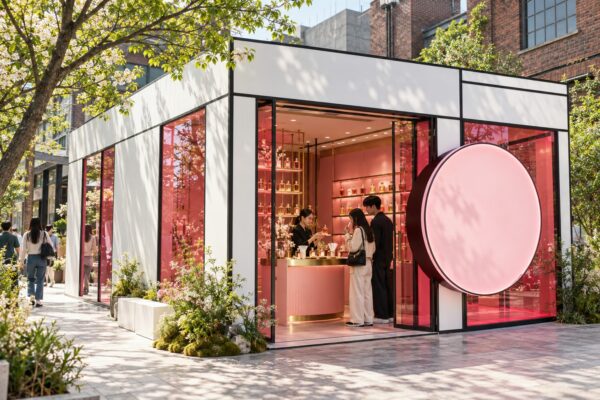
From October 22 to November 16, 2025, the House of Guerlain at 68 Avenue des Champs-Élysées will also host the exhibition " En plein cœur" (At the Heart), conceived as a dialogue between contemporary creation and olfactory experience. Perfume thus becomes content, exhibition, expertise, and experience.
Luxe Daily analyzes this evolution more broadly in its article on how perfume is becoming a medium and an immersive experience.
For a century-old icon, this strategy is particularly effective: it allows the heritage to be passed on without turning it into nostalgia.
Heritage and innovation: the true strength of Guerlain
A heritage brand must resolve a constant contradiction: preserving enough to remain recognizable and changing enough to stay vibrant. Guerlain has mastered this balance particularly well.
Shalimar remains Shalimar. But around it, new editions, reinterpretations, artistic collaborations, and new uses of perfume are emerging.
The same logic is found in other lines from the House. Luxe Daily, for example, analyzed the hybrid positioning ofAqua Allegoria and the "perfume-skincare" concept, which demonstrates another way in which Guerlain perfumery is evolving in response to new expectations. On the one hand, Shalimar embodies permanence. On the other, Aqua Allegoria explores new ways of applying fragrance.
These two trajectories are not opposed. They demonstrate that a luxury brand can simultaneously preserve its heritage and experiment.
Why does Shalimar continue to captivate after a century?
The longevity of Guerlain's Shalimar can ultimately be summed up by four strengths. The first is its olfactory identity. Bergamot, iris, flowers, vanilla, balms, and tonka bean compose a recognizable accord.
The second is its visual identity. The bottle has a silhouette that a century of advertising has established in perfume culture. The third is its narrative. Whether considered a brand legend or a powerful cultural icon, Shalimar possesses a story that gives the fragrance a depth that transcends its formula. The fourth is its ability to reinvent itself.
A classic becomes fragile when it's transformed too quickly. It becomes equally fragile when it's allowed to stagnate. Guerlain has chosen a third way: protecting certain codes while regularly creating new points of entry. This is undoubtedly why Shalimar remains relevant.
It does not seek to become a fragrance of 2026. Rather, it serves as a reminder that a sufficiently strong creation can transcend the 1920s, the minimalism of subsequent decades, the rise of niche fragrances, the return of gourmand perfumes, and the new expectations of luxury beauty without abandoning its identity.
Which Shalimar should I choose today?
The range now allows you to approach the Shalimar universe in different ways.
Shalimar Eau de Parfum
This is one of the best entry points to understand the iconic structure of the perfume: bergamot, iris, jasmine, rose, vanilla, balsamic notes and tonka bean.
It retains the characteristic sensuality of the line and allows the Guerlinade to be clearly discovered.
Shalimar Extract
The Extrait is aimed more at those who seek the precious and enveloping dimension of Shalimar. Guerlain retains the same essential structure, giving full power to the balsamic, vanilla and tonka bean base.
Shalimar Essence
Launched to accompany the centenary, this Eau de Parfum Intense accentuates the vanilla facet and allows Shalimar to be read through a contemporary sensibility.
Therefore, there is no single relationship with Shalimar. One can seek its history, its historical sillage, its concentration, or an interpretation more focused on vanilla.
FAQ: Everything you need to know about Guerlain's Shalimar perfume
When was Shalimar by Guerlain created?
Shalimar was created in 1925 by Jacques Guerlain. Guerlain and LVMH officially celebrated its centenary in 2025.
What is the olfactory family of Shalimar?
Guerlain presents Shalimar as the first amber perfume in history. The term "amber" here refers to a warm and enveloping olfactory construction dominated in particular by vanilla, balsamic notes and tonka bean.
What are the main notes of Shalimar?
The Eau de Parfum combines, among other things, bergamot, iris, jasmine, rose, vanilla, balsamic notes and tonka bean. These materials contribute to the Guerlinade, the House's iconic signature.
Who designed the Shalimar bottle?
The historic bottle was designed by Raymond Guerlain. Its shape is a reference to the basins in the Shalimar Gardens, and its blue stopper has become one of the distinctive features of the fragrance.
Why is Shalimar considered a legendary perfume?
Because it brings together several dimensions that are rarely so coherent: a major olfactory innovation, an immediately recognizable identity, an iconic bottle, a strong brand history and now more than a hundred years of transmission.
Shalimar, or the art of not aging
One hundred years is an eternity in an industry fueled by innovation. Yet, Shalimar Guerlain continues to exist as more than just a memory. It remains worn, interpreted, reissued, exhibited, and its stories told. It inspires new creations and continues to hold a special place in Guerlain's olfactory heritage.
Perhaps Shalimar's true modernity lies precisely there. Not in the desire to chase every trend, but in the confidence placed in a signature strong enough to withstand their passing.
Between bergamot and vanilla, Art Deco and contemporary perfumery, craftsmanship and storytelling, Shalimar shows that a luxury icon doesn't transcend time by remaining static. It transcends time because it knows exactly what it must never lose.
Official French sources
- Guerlain – The House of Guerlain: History – official history of the House, creation of Shalimar in 1925, Jacques Guerlain, bergamot-vanilla accord and bottle by Raymond Guerlain.
- LVMH – Shalimar, a timeless icon from Guerlain, celebrates its 100th anniversary
- Decorative Arts – The 1925 Exhibition