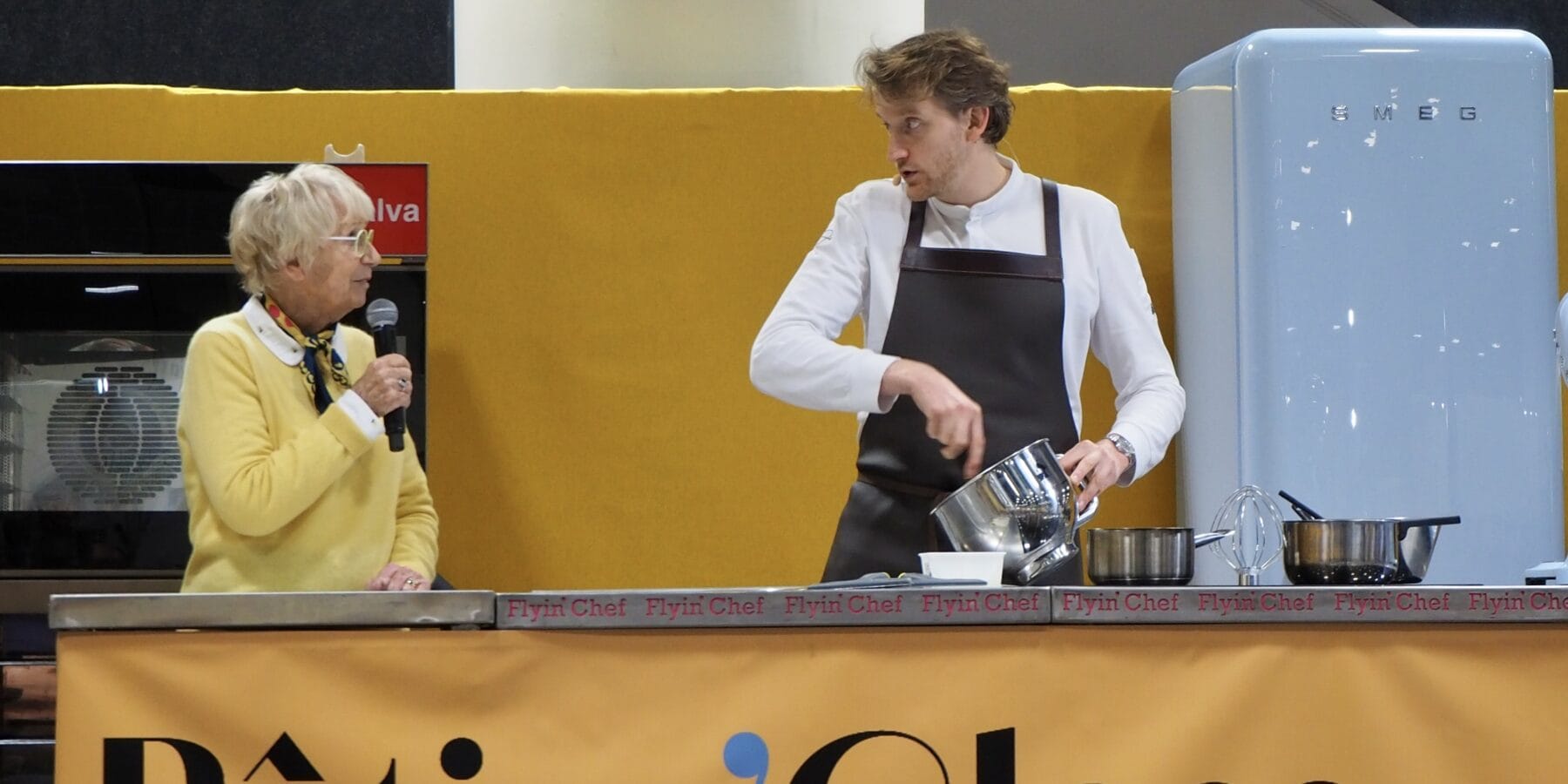
The Pâtiss'Art 2025 trade fair did not ultimately take place in Paris, contrary to some preliminary announcements. Its second edition was held from October 24th to 27th, 2025 at the Deauville International Centrein Normandy.
For four days, the event brought together pastry chefs, chocolatiers, bakers, suppliers, artists, students and amateurs around a shared conviction: pastry making is no longer just about producing a dessert. It is becoming a territory for creation, transmission, experience and, increasingly, brand strategy.
Sponsored by Maxime Frédéric, this edition welcomed nearly 8,600 visitors, according to the organizers' report. Demonstrations, masterclasses, conferences, workshops, exhibitions, and competitions gave the event a dimension that far exceeded that of a simple professional gathering.
Pâtiss'Art 2025, a second edition set up in Deauville
Presented by its organizers as an international event bringing together the various professions in the pastry and chocolate, Pâtiss'Art is aimed at two complementary audiences.
Professionals , and discuss industry trends. Meanwhile, individuals can attend demonstrations, learn chefs' techniques, and participate in workshops.
This dual identity is part of what makes the show unique. Pâtiss'Art doesn't just seek to celebrate haute pâtisserie. It also aims to make the techniques more transparent and accessible, without diminishing the technical skill involved.
The2025 edition was the second held in Deauville. The Deauville International Centre offered an environment perfectly aligned with the event's positioning: a destination associated with elegance,high-end hospitality, Norman heritage, and gastronomic tourism. This convergence of local area and pastry excellence underscores the growing importance of pastry as a genuine travel incentive. A boutique, a tea time, a competition, or a signature creation can now transform a city into a gourmet destination. This trend is also explored in our feature on La Liste 2026 and the rise of pastry within the luxury gastronomic sector.
Maxime Frédéric, godfather of a sensitive and contemporary pastry shop

For this second edition, Pâtiss'Art chose Maxime Frédéric as its patron. The chef, deeply attached to his Norman roots, develops a style of pastry where technical precision never overshadows taste and emotion. His career, spanning Cheval Blanc Paris, thegastronomic world of Louis Vuitton , and the creation of PleinCœur, makes him a particularly representative figure of the sector's transformations.
Contemporary pastry is no longer confined to luxury restaurants . It is flourishing in boutiques, cafes, chocolate shops , artistic collaborations, and hybrid spaces where gastronomy , hospitality, and culture converge.
Maxime Frédéric 's presence reflected this evolution. Beyond his role as mentor, the chef participated in the Pâtiss'Live program with Gaëtan Lucas, creating a marshmallow bear. A deliberately childlike creation, but crafted with the exacting standards of fine pastry .
His work also illustrates how a sweet creation can become a point of contact with a luxury brand. The Louis Vuitton ice creams designed by Maxime Frédéric extend this logic: the dessert becomes simultaneously a gastronomic product, an experience, and a vehicle for visual identity.
Spaces designed for learning, watching, and experimenting
The Pâtiss'Art 2025 program was based on several complementary formats. This organization made it possible to meet the expectations of both a professional looking for trends and a family coming to discover the art of pastry making.
Pâtiss'Live: the chefs speak
Pâtiss'Live provided a space for conferences, demonstrations and discussions. Hosted in particular by Carinne Teyssandier and Asma Mehnana, it welcomed chefs and experts to share recipes, techniques and topics related to the evolution of the profession.
The program included a presentation of the Mogador macaron by Sébastien Claverie, head of French production at Pierre Hermé, a demonstration by Adrien Petitgenêt on chocolate and oats, as well as discussions on chocolate, culinary art and tea time cultures.
The presence of Pierre Hermé in the program highlights the ability of major French brands to adapt their creations to the seasons and changing tastes. This strategy is reflected in the frozen world developed by Pierre Hermé, where cold becomes a new medium for gastronomic expression.
Pâtiss'Class: observe the technique live
Pâtiss'Class allowed visitors to follow the actions of professionals in the heart of the exhibition space.
This format has real educational value. In pastry making, the final result conceals a series of precise operations: temperature, whipping, emulsification, crystallization, lamination, baking, and assembly. Observing the chef allows you to understand what the display case doesn't show.
The demonstration thus becomes a tool for showcasing the craft. It reveals the time, training, and mastery required behind a seemingly simple creation.
Pâtiss'Factory: getting your hands dirty
The Pâtiss'Factory workshops offered adults practical sessions devoted to classics or their reinterpretations: opera, Paris-Brest, Christmas log or cake design.
Organized in small groups, they allowed participants to work alongside a chef and follow each step of the process. The visitor was no longer a spectator; they became part of the creative process.
This participatory dimension responds to a strong expectation in contemporary gastronomy. The public no longer simply wants to buy or taste. They want to understand, learn, and leave with a skill or a personal souvenir.
Pâtiss'Kids: passing on the first skills
Pâtiss'Kids was aimed at children aged 6 to 12. More than 350 children participated in the activities offered during the four days of the fair, according to the organization's report.
They were able to prepare shortbread cookies, cupcakes and other recipes while discovering the fundamental techniques and principles of more sustainable eating.
This transmission of knowledge is essential for the food industry. It demonstrates that pastry-making is not solely based on the spectacular image of a cake. It begins with knowledge of the ingredients, respect for quantities, patience, and precision.
Pâtiss & Pop: when dessert engages in a dialogue with art
Pâtiss'Art, even in its name, asserts a direct link between pastry creation and artistic creation. The Pâtiss & Pop embodied this encounter through collaborations between chefs, photographers, visual artists, ceramicists, and artisans.
The theme of "the ephemeral and the permanent" was particularly relevant. A pastry is destined to disappear when it is eaten. Yet, its design, the memory it evokes, its photograph, and the emotion it inspires can remain.
The collaborations presented during the show explored materials, volumes and territories. Ceramics met dessert, while chocolate, meringue or silicone became plastic materials.
Photographer Stéphane de Bourgies also presented a selection of portraits of figures in the world of pastry. The chef was no longer simply shown at work: he himself became the subject of a work of art.
This convergence of art, luxury, and gastronomy is central today. A pastry can adopt the design elements of a piece of jewelry, a perfume bottle, or an accessory. The industry develops highly visual pieces, but the most compelling creations remain those whose aesthetics truly enhance the tasting experience.
The Pâtiss'Art Grand Prix puts the religieuse pastry in the spotlight
One of the major new features of 2025 was the first edition of the Grand Prix Pâtiss'Art.
The competition, organized under the auspices of the Toques Françaises with the support of Relais Desserts, was chaired by Nicolas Bernardé. Maxime Frédéric served as honorary president.
The competition had chosen the theme "Heritage and Modernity" and highlighted a classic of French pastry: the religieuse.
The candidates had to create two interpretations. The first retained the spirit of a product intended for retail sale. The second took the form of a contemporary religieuse pastry served on a plate. This structure allowed for the assessment of both mastery of the fundamentals and the capacity for innovation.
Choux pastry, cream, icing, balance of textures, clarity of flavors, and aesthetic precision formed the foundation of the competition. Tradition was not viewed as a fixed form, but as a grammar from which chefs could create their own desserts.
Adrien Petitgenêt wins the 2025 Grand Prix
Pastry chef Adrien Petitgenêt, then working at the Cures Marines in Trouville-sur-Mer, won the Grand Prix Pâtiss'Art 2025.
Her contemporary nun paid homage to the Norman bocage. The dessert included a lemon shortbread from Trouville, a yogurt and orange blossom cream, a fresh Normandy cheese mousse, and a lemon and elderflower sauce.
This creation illustrated a strong trend in contemporary pastry making: combining high technical skill with a clear understanding of the local area. The local product wasn't used as a mere narrative device; it directly contributed to the dessert's distinctive flavor.
Gaspard Carrando received the innovation award, while Fabrice Pottier was recognized for his work on tradition.
Jeanne Boisselier recognized among the Young Talents
The Grand Prix Pâtiss'Art Jeunes Talents was won by Jeanne Boisselier, a student at the Lyfe Institute.
His creation combined coffee, apple and orange blossom, with caramelized choux pastry, faisselle ice cream and an apple-cider sauce.
This category, reserved for students and apprentices, represented a significant opportunity for the sector. In an industry facing recruitment and knowledge transfer challenges, giving visibility to young professionals helps make career paths more attractive.
Cake design and mille-feuille: two visions of technical excellence
The show also hosted the French Cake Design Championship. Nadia Flecha Guazo, known as Chokolate Designs, won the title with a piece made almost entirely of wafer paper.
Her 450-gram creation reportedly required over 120 hours of work. It showcased a lighter and more refined approach to cake design, while maintaining the level of precision expected in a national competition.
The Millefeuille Master competition completed the program of events. Floran Grech, based in Chantilly, won first prize in this second edition.
The choice of mille-feuille is far from trivial. Few desserts so clearly demonstrate the exacting standards of French pastry. The puff pastry must remain neat, even, and crisp, while the cream must add richness without making the whole thing soggy. Beneath its apparent simplicity, the mille-feuille acts as a true showcase of technical skill.
Sustainability, plant-based ingredients, and sourcing: pastry facing its responsibilities
Sustainable pastry was among the topics discussed at the 2025 edition. Professional discussions focused in particular on sourcing, the plant-based trend, nutrition, gluten-free or less sweet options and, more broadly, on pastry that is considered "sustainable and responsible".
The issue now goes beyond the occasional replacement of an ingredient. It concerns the entire model: origin of raw materials, seasonality of fruits, energy consumption, packaging, preservation, transport, management of unsold goods and working conditions.
Reducing sugar also presents a technical challenge. Sugar isn't just used to provide sweetness; it plays a role in the texture, color, preservation, and stability of many preparations. Reducing it without disrupting the balance of a recipe therefore requires significant research.
Plant-based alternatives raise similar questions. Simply replacing butter, cream, or eggs isn't enough. The texture, emulsification, and lingering finish must be recreated to preserve the tasting experience.
A trade show as much as a public experience
With its exhibitors, equipment, raw materials and Pâtiss'Hub space, Pâtiss'Art also served an economic function.
For brands and suppliers, the trade show was an opportunity to present new products, meet craftspeople, and understand their needs. For professionals, it allowed them to compare tools, identify new solutions, and forge collaborations.
This networking role is essential in a sector composed of very different actors: independent craftsmen, hotel groups, restaurants, schools, equipment manufacturers, producers, distributors and large houses.
At the same time, demonstrations, tastings, and workshops made the event accessible to the general public. This combination of professional expertise and visitor experience partly explains its popularity.
It also reflects a broader shift. French haute pâtisserie is now seeking to connect more closely with consumers without compromising its high standards. It is investing in festivals, workshops, digital platforms, and even delivery services. This transformation is explored in our analysis of Philippe Conticini's partnership with Uber Eats.
Why is Pâtiss'Art important in the world of luxury gastronomy?
The success of a show like Pâtiss'Art shows that dessert now occupies a strategic place in gastronomy and hospitality.
In a luxury hotel, the pastry chef directly contributes to the establishment's reputation. In a high-end brand, a sweet creation can make the brand's world more accessible. In an independent boutique, a signature cake can become a marketing asset as important as the decor or packaging.
Pastry-making possesses several characteristics sought after by luxury brands: rarity, seasonality, artisanal technique, precision, emotion, and the ability to create memories.
It also remains more accessible than a gourmet dinner or a fashion item. A pastry allows you to momentarily enter a premium world, with a more limited financial and time commitment.
Pâtiss'Art showcases this new economy of sweets. The chef becomes a creator, entrepreneur, educator, and sometimes ambassador. The dessert becomes a product, a visual work of art, cultural content, and an experience.
Practical information about the Pâtiss'Art 2025 edition
The 2025 edition took place at the Deauville International Centre, located at 1 avenue Lucien-Barrière in Deauville.
The salon was open:
- Friday, October 24, 2025 from 3 p.m. to 8 p.m.;
- Saturday, October 25, 2025, from 10 a.m. to 8 p.m.;
- Sunday, October 26, 2025, from 10 a.m. to 6 p.m.;
- Monday, October 27, 2025, from 10 a.m. to 6 p.m.
These times are now provided for archival purposes. They nevertheless allow us to precisely date this second edition and avoid confusion with announcements relating to subsequent editions.
Pâtiss'Art 2026 leaves Deauville for Paris
After the Normandy edition of 2025, the organization announced a new format for Pâtiss'Art 2026, scheduled for October 3 and 4, 2026 at Espace Étoile Saint-Honoré, in Paris.
This change of venue marks a new stage for the show. Deauville allowed Pâtiss'Art to establish itself in a strong gastronomic region. Paris now offers it immediate proximity to luxury hotels, schools, pastry shops, and major international brands.
The challenge will remain the same: to preserve the dimension of transmission and proximity while supporting the growth of the event.
Pâtiss'Art 2025 in four questions
Where did Pâtiss'Art 2025 take place?
The trade fair was held at the Deauville International Centre in Normandy, not in Paris.
What were the dates of the trade fair?
The second edition took place from Friday 24th to Monday 27th October 2025.
Who was the sponsor of Pâtiss'Art 2025?
The Norman pastry chef Maxime Frédéric was the patron of this edition.
Who won the Pâtiss'Art Grand Prix 2025?
Adrien Petitgenêt, pastry chef at the Cures Marines in Trouville-sur-Mer, won the professional competition. Jeanne Boisselier triumphed in the Young Talents category.
Pâtiss'Art, a privileged observatory of the evolution of sweets
With nearly 8,600 visitors, Pâtiss'Art 2025 confirmed the public's interest in the trades and cultures of pastry making.
The success of the show is not solely based on the presence of famous chefs. It lies in the diversity of its formats: learning, demonstration, competition, art, innovation, professional exchange and product discovery.
The event primarily demonstrates that French pastry continues to evolve without abandoning its fundamentals. The religieuse, the mille-feuille, and the macaron remain, but they are reinterpreted through new tastes, new constraints, and new uses.
More plant-based, more attentive to sourcing, more experiential, and more open to dialogue with luxury and art, contemporary pastry no longer simply concludes a meal. It creates a destination, tells the story of a territory, and builds a memory.
To keep up with these developments, you can also find news about chefs, houses and exceptional restaurants in the gastronomy section of Luxe Daily.
Official French sources
- Pâtiss'Art – official press release presenting the results of the 2025 edition
- Normandy Region – Official presentation of the Pâtiss'Art 2025 trade fair
- Deauville International Centre – Pâtiss'Art 2025 program and practical information