Only Desire – A fragmented premium market: from niche to "massage"

Premium perfumery has never been so rich, nor so difficult to decipher. On one hand, so-called "niche" brands pursue a promise of singularity, often based on a more radical olfactory style, a workshop-like narrative, and a carefully controlled scarcity. On the other, major houses and fashion labels dominate the market with highly visible launches, global brand ambassadors, and wide distribution, sometimes described as "massage" when prestige extends to larger volumes.
This fragmentation isn't just a matter of taste; it redefines what "premium" means. Premium is no longer simply a price or a bottle ; it's a collection of evidence of perceived value, from the fragrance itself to the branding, from store presence to the quality of the contents. In a world where consumers compare, comment, rate, and recommend in real time, the act of purchasing is less driven by simple desire and more by social, emotional, and community validation.
Why is Diesel aiming for a move upmarket now?

In this context, Diesel's premium repositioning with Only Desire seems as much a matter of timing as a deliberate brand strategy. Diesel possesses a unique cultural capital, built on denim,counter-cultural energy, clubbing, irony, and a form of visual provocation. This capital can become a premium asset if the brand manages to translate it into signs of sophistication, consistency, and desirability, without losing its original spark.
The implicit question, the one that consumers and selective retailers alike are asking, is simple: Can Diesel make "cool" a legitimately expensive label? Perfume is an ideal testing ground for this transformation. It's an entry-level luxury product, an object of intimate ritual, and an industry where creativity, design, and storytelling can enhance perceived value without requiring the same expenditure as a complete wardrobe.
Only Desire as a brand platform, not just a launch
A perfume launch can be a one-off event; a brand platform, on the other hand, establishes a reusable grammar. The strategic advantage ofOnly Desire lies in being conceived as a chapter, not a parenthesis. This means: a name capable of supporting future variations, a creative territory clear enough to be recognizable, and an emotional promise that goes beyond simply describing the fragrance.
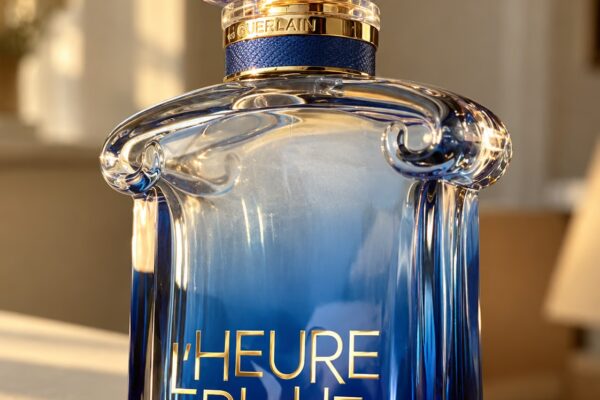
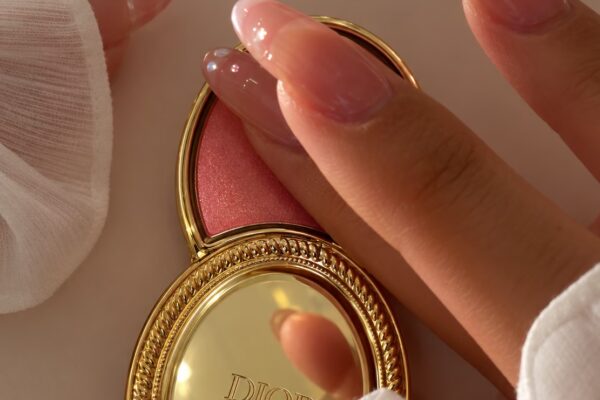
In a highly segmented perfume industry, performance no longer stems solely from "newness" but from a strategic approach: how the brand tells its story, how it proves its point, how it distributes, and how it keeps customers coming back. Historic houses like Dior, Chanel, and Guerlain possess this enduring strength; more recent brands like Byredo, Le Labo, and Maison Francis Kurkdjian have succeeded in transforming a signature into a social language. For Diesel, the challenge is similar: to makeOnly Desire a lasting expression of its DNA, premium enough to hold its own, and distinctive enough to stand out from the crowd.
Transforming denim DNA into an olfactory language: material, texture, contrast
Translating denim into a fragrance isn't about simply " smelling like jeans ," but about evoking what it symbolizes: a material, a tension between raw and refined, a relationship to the body, to movement, to wear and tear that tells the story of life. In perfumery, this transposition often involves textured accords, woody notes, clean musks, enveloping ambers, and sometimes leathery or mineral facets. It's not about listing notes like a recipe, but about constructing a sensation consistent with the Diesel aesthetic.
A premium fragrance, in the modern sense, must also manage a paradox: it must be immediately wearable while retaining a memorable edge. Consumers expect longevity, sillage, but also a detail that defines the brand's identity. This is where the perfumer's craft, often called the "nose," intersects with that of the artistic director: one composes the invisible essence, the other constructs the tangible reality. Moving upmarket hinges on this dialogue, on the precision of the intention, and on the ability to convey an idea, not just a single accord.
Design and visual codes: from product-object to icon status
In the premium market, the bottle isn't just a container; it's a symbol. The design carries a piece of history, but also a promise of quality. A brand that wants to boost its desirability can't rely solely on its logo: it must create an object that people want to keep on a shelf, photograph, and give as a gift. This is an often underestimated detail: perfume now lives and breathes imagery, and imagery circulates.
The premium repositioning is measured by concrete signals: balanced proportions, perceived quality of the glass and hood, precision of the screen printing, choice of finishes, and a deliberate understated elegance or controlled boldness. Here again, Diesel must strike a balance: remaining recognizable without becoming a caricature. Premium doesn't mean erasing the spirit of transgression; it means channeling it, making it desirable rather than simply ostentatious.
Brand messaging: emotion, uniqueness, and proof
Emotional storytelling has become the common language of perfumery. But emotion alone is no longer enough, because it's everywhere. Uniqueness, however, must be articulated and demonstrated. For Only Desire , the challenge is to craft a narrative that connects Diesel's culture to an intimate promise: why this fragrance, why now, why you? The brand must speak of desire without reducing it to a slogan, and make it clear what it means by this concept.
Ultimately, proof becomes the key to success. Proof of creativity, with a credible olfactory direction and a coherent narrative. Proof of experience, with meaningful retail presentation. Proof of consistency, with messaging that is similar across all media. In a world where distrust of marketing can be strong, premium is built on controlled transparency and the ability to stand by a point of view.
Muse, casting and communities: from audience to club
The dominance of digital communities has changed the very notion of a brand ambassador. A global star brings reach, but a community brings repetition, conversation, and a form of co-signature. For Diesel, which has historically cultivated a relationship with tribes, street culture, music, and nightlife, the question is less "who will embody" than "who will activate": which casting can unite without homogenizing, create a sense of connection without trivializing the brand?
Perfume, a highly emotional product, lends itself to a hybrid strategy: a face for the visuals, and content creators for brand engagement. The roles of influencers, brand content creators, community managers, and video producers then become as important as media buying. Premium repositioning hinges on the quality of these collaborations: art direction, styling, photography, editing, tone—everything must contribute to an impression of mastery.
Distribution: selective, DTC and travel retail, three areas to orchestrate
Upmarket positioning is often recognized by distribution channels. Entering or strengthening a presence in the selective distribution sector, working with leading retailers, optimizing counter visibility, and securing prime locations are all markers of prestige. But today, selective distribution is not just a place to shop; it's a stage. The quality of merchandising, the training of sales associates, the consistency of testers, the visual merchandising, and the ability to bring the brand to life all determine conversion rates.
Alongside this, direct sales, or DTC for "direct-to-consumer," has become a strategic weapon. It allows brands to control the narrative, offer services (engraving, gift sets, limited editions), capture data, and cultivate customer loyalty. Travel retail, finally, acts as an amplifier: airports and international zones remain prime locations for premium impulse purchases, where brands can attract buyers who enjoy giving or treating themselves. For Diesel, the key is to avoid contradiction: a fragrance that aims to be premium must be present, but not so omnipresent that it loses its symbolic value.
Pricing and product range architecture: building perceived value
Pricing isn't a label; it's a message. Moving upmarket means committing to a price that's consistent with the offering, while remaining transparent compared to the competition. Consumers spontaneously compare Diesel to premium fashion brands and select perfumes. If the price is too low, the premium promise is weakened; if it's too high without tangible proof, the risk is rejection or customers waiting for promotions that damage the brand image.
Product range architecture, however, becomes crucial for long-term success. A single fragrance might create a surge in popularity, but a well-structured platform can establish a solid foundation: formats, concentrations, seasonal sets, and potential future variations. The brand manager's role is then to plan carefully without over-launching. In a market where novelty wears off quickly, the best strategy is often to build a strong core range and reserve new products for times when they offer genuine added value, not just a marketing ploy.
Experiences and rituals: from the counter to the cultural event
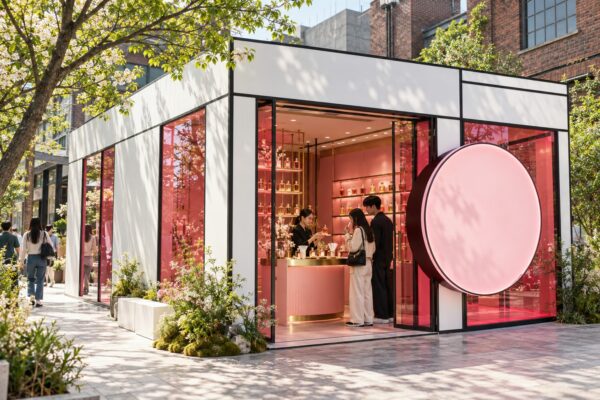
Premium is an experience. The brands that succeed today don't just sell a bottle; they offer a ritual, an experience, sometimes an entire microcosm. For Diesel, the opportunity is clear: to transform its cultural heritage into experiential moments, pop-ups, artistic collaborations, and events with social value. Paradoxically, perfumery lends itself perfectly to events: people come to smell, to be seen, to share their stories.