Mackage: a brand founded in Montreal in 1999
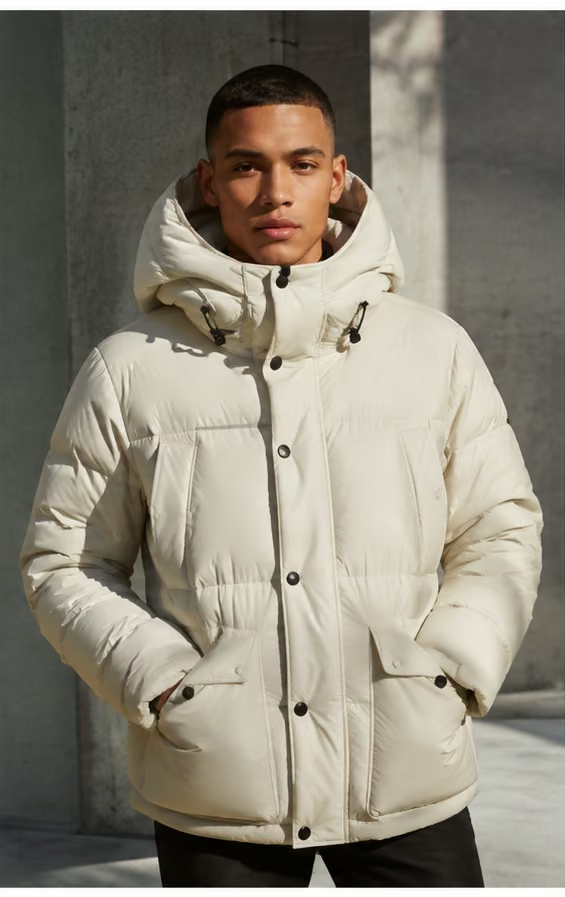
Some brands are recognizable by their monogram. Mackage, however, was built around a feeling: that of being protected without sacrificing style. From Montreal, the Canadian brand develops a very particular vision ofluxury outerwear, at the crossroads of technical clothing and contemporary fashion.
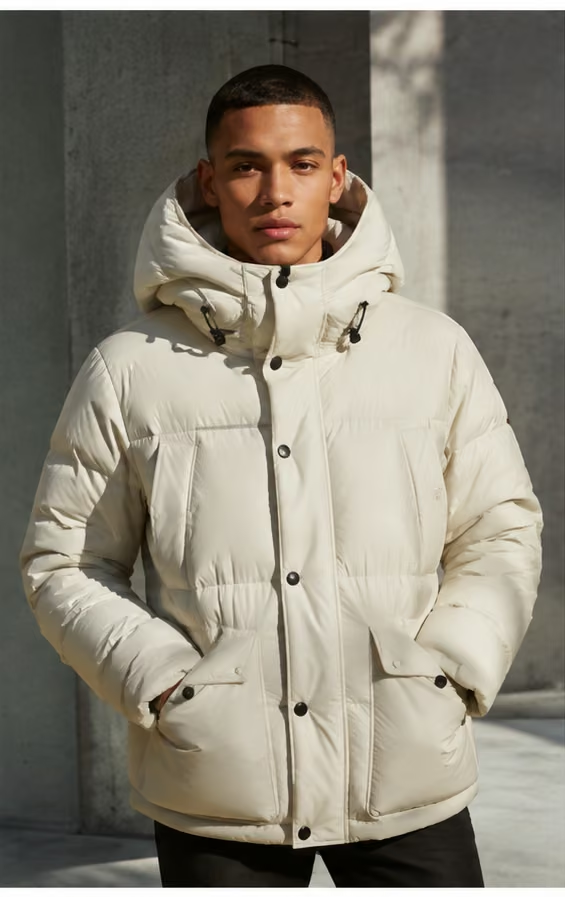
Sculpted down jackets, wool coats , leathers, parkas capable of withstanding negative temperatures, rain jackets with taped seams: at Mackage, functionality is not hidden behind design. It forms its very structure.
In 2026, this formula evolves once again. With its Oasis Spring/Summer 2026, the brand now seeks to transcend its image as a winter coat specialist. The wardrobe becomes lighter, more versatile, and suitable for all seasons. The goal: to make protection an everyday element, from the Montreal chill to milder climates.
To understand Mackage, one must return to his home territory. Montreal imposes a particular constraint on clothing: winter is not a creative abstraction there. The cold, the wind, the snow, and the temperature variations transform protection into a daily necessity.
Founded in 1999, Mackage has made this climatic constraint the starting point of its identity. The company now defines itself as a specialist in all-season protection and officially associates its heritage with three dimensions: know-how, technical innovation , and mastery of materials.
This positioning explains why Mackage's DNA differs from that of a traditional ready-to-wear brand. Here, the coat is not just the final layer of an outfit. It is the central product.
The cut must be appealing. The fabric must enhance the garment. But the piece must also protect its wearer when conditions become truly challenging. This interplay between function and desirability has been the guiding principle of the house for over a quarter of a century.
“Aesthetics That Protect”: luxury according to Mackage
Mackage sums up its philosophy with a formula that has become central to its brand discourse: Aesthetics That Protect.
It helps us understand a broader evolution in the luxury market. For a long time, the function of a high-end garment could seem secondary to its cut, origin, or symbolic value. The development of technical luxury, premium skiwear, gorpcore, and hybrid wardrobes has changed this hierarchy.
Customers now expect clothing to be both attractive and high-performing. A down jacket must maintain its shape while providing insulation. A rain jacket must offer protection without looking like purely athletic wear. Wool must provide warmth while remaining supple enough to create an elegant silhouette.
It is in this middle ground that Mackage finds its uniqueness. Some current products from the company are thus advertised with a fill power of 800, traceable duck down, windproof and water-repellent fabrics, or protection tested down to -20°C or -25°C depending on the model.
Luxury is therefore no longer solely about the appearance of the product. It also rests on its ability to tangibly improve the experience of the wearer.
This reflection also aligns with the evolution described by Luxe Daily around well-being as the new luxury of high-end fashion brands : comfort, use, sensation and durability are gradually becoming valuable attributes in their own right.
Le Monde Mackage: The strategic turning point of 2025
The year 2025 marks an important chapter. In the fall, the brand unveils Le Monde Mackage, a campaign and collection designed to expand its reach beyond traditional outerwear.
The Fall/Winter 2025 collection showcases felted wools, reversible checks, houndstooth, textured surfaces, leathers, and shearling. Mackage presents clothing as a protective system built around materials and sculpted silhouettes.
The strategy becomes clear: to no longer be identified solely with "a good Canadian down jacket", but to build a true universe of contemporary luxury.
The campaign notably features Charlie Hunnam and Stella Maxwell. Luxury Daily, in the article that originally broke the story, explained that the "Le Monde Mackage" initiative, unveiled in September 2025, sought precisely to refocus the brand around luxury, destination, and its technical expertise.
This evolution is important for both semantic referencing and brand understanding: Mackage is no longer positioned solely on high-end down jackets. Its territory extends to ready-to-wear, travel, skiing, rain gear, and now certain lifestyle categories.
Oasis 2026: Mackage wants to become a four-season brand
The Oasis Spring/Summer 2026 collection takes this transformation much further. The starting point is no longer extreme cold, but the movement between seasons, destinations, and climates.
The house is introducing lighter double-faced wools, jackets, trench coats, suede and leather pieces, new waterproof constructions, and ultralight insulation in certain silhouettes. The choice is strategic.
A brand strongly associated with winter can suffer from significant seasonality. Developing transitional outerwear allows it to remain relevant in spring, during travel, during changing weather, and in regions with more temperate temperatures. The jacket then becomes adaptable.
We no longer dress solely for "winter" or "summer", but for a day that may involve rain, wind, transport, air-conditioned indoors and outdoor travel.
Mackage transforms this everyday reality into a luxury proposition.
Rain, too, becomes a creative territory
The Spring/Summer 2026 rainwear collection perfectly illustrates this strategy. Mackage announces an expanded range based on textile engineering, material development, responsible manufacturing, and constructions with taped seams. Several models thus combine weather protection, lightness, and a structured silhouette.
This detail may seem technical, but it's crucial. Seams are often a weak point in waterproof garments: the needle pierces the fabric during assembly. A seam-sealed adds an extra step to limit water infiltration in these areas.
This is precisely how technical expertise can become an attribute of luxury. A finish is no longer merely decorative; it plays a functional role.
Materials: what Mackage can actually claim
The environmental issue deserves more attention than is addressed in many brand statements. Mackage claims to work with several standards and certifications applicable to its materials.
RDS Certified Down
The company states that since 2019 down that meets the Responsible Down Standard, a standard designed in particular to ensure a chain of custody and certain requirements relating to animal welfare.
Some current products also feature GRS- certified recycled down and down traceability.
GRS certified recycled textiles
For its recycled fabrics, Mackage cites the Global Recycled Standard. The standard focuses in particular on the presence of recycled material and the associated chain of custody.
Leather from LWG Gold tanneries
Mackage also indicates that it uses leather from tanneries that have obtained the Gold rating from the Leather Working Group, an audit system that focuses on various environmental criteria related to the operation of tanneries.
These elements allow for a much more precise discourse than the vague formula "responsible materials".
They do not allow the presentation of every Mackage product as entirely sustainable. Rather, they show a progression towards more certified, recycled, or traceable materials, depending on the category.
77% recycled or certified materials: a figure to be interpreted correctly
Mackage reports an interesting indicator: in 2023, 77% of all materials purchased by the brand were recycled and/or certified.
The company also indicated that 60% of its autumn-winter 2023 jackets were made with 100% recycled down.
These figures are much more useful than a simple statement of intent, but they must be interpreted correctly.
"Recycled and/or certified" does not mean that 77% of all materials used are recycled. The category encompasses several realities.
This nuance is essential in sustainable luxury.
The sector is entering a period where brands are increasingly expected to provide quality evidence: exact percentage of recycled material, certification, origin, actual product durability, repairability, production conditions.
Luxe Daily has already explored this shift with the link between craftsmanship, know-how and value in luxury : the origin and method of manufacture become as important as the finished object.
Sustainable fashion: in France, proof is becoming increasingly important
This requirement for precision goes beyond Mackage. Since October 1, 2025, France has been implementing a voluntary system for displaying the environmental cost of clothing. The calculation takes into account factors such as climate, biodiversity, resource use, certain types of pollution, and parameters related to sustainability.
As of June 22, 2026, the Ministry of Ecological Transition indicated that nearly 100 brands had joined the initiative and that 40,000 products were already listed.
The rapprochement with Mackage must, however, remain cautious: this does not mean that the company is currently participating in the French scheme.
There is even an interesting nuance regarding its core business. The official French documentation indicated at the launch that while the majority of clothing fell within the scheme, certain categories, including down jackets, still required specific regulations.
The Mackage case therefore perfectly illustrates the complexity of responsible fashion: the more technical a garment becomes, with membranes, insulation, leather, accessories, and fiber blends, the more delicate it becomes to measure its full impact.
Mackage's craftsmanship is also industrial and technical
The word "craftsmanship" immediately evokes a hand, a workshop, a passed-down skill. However, in the case of a technical coat, the expertise is more hybrid. It requires knowing how to choose insulation, calibrate its weight, distribute the down, construct a hood, protect a zipper, ensure waterproofing, assemble several textiles, and maintain the garment's mobility.
At Mackage, technical expertise is evident in the details:
- quilting and insulation distribution ;
- storm cuffs;
- isolated pockets;
- adjustable hood visors;
- technical membranes;
- windproof fabrics;
- water-repellent constructions;
- convertible or removable parts;
- Assemblies designed to preserve heat and mobility.
The SHILOH-NFZ model, for example, is presented with down insulation, a fill power of 800, Nordic Tech construction, a hood with storm visor, protective cuffs and a claimed capacity down to -25 °C.
The perceived value here depends as much on the design as on theengineering of the garment.
A design made to last rather than disappear after one season
Mackage's current communication places great emphasis on the notion of an iconic silhouette.
Its CORE 2025 campaign revisits the forms that contributed to the brand's recognition and reinterprets them rather than abandoning them. This approach is interesting in the context of contemporary luxury.
Desirability is no longer necessarily linked to constant renewal. A strong brand must also know how to maintain identifiable forms, improve materials, revise proportions, or introduce a function without erasing what makes the product recognizable.
This is one of the mechanisms that allows certain fashion items to become lasting signatures.
For Mackage, the challenge now is to create that same reflex around the coat: a silhouette that is identified even before reading the label.
From coats to lifestyle: how far can Mackage go?
Perhaps one of the most significant developments of 2026 lies far from the down jacket.
To celebrate its partnership with the Croatian national football team, Mackage has developed a capsule collection including technical apparel, knitwear, polo shirts, and trousers. Most importantly, this collaboration marks the launch of Mackage's first sneaker. This launch is far from insignificant.
A sneaker allows an outerwear brand to enter a different usage pattern. Coats are seasonal. Shoes can accompany the customer much more regularly.
Mackage is therefore gradually opening up a new space between fashion, sport, travel and lifestyle.
However, the brand is taking a risk well known to luxury brands: that of excessive expansion.
Its differentiating power lies in its expertise in protective clothing. The more it expands its product range, the more it will need to maintain this technical consistency to avoid becoming just another premium ready-to-wear brand.
Paris, a strategic showcase for internationalization
Mackage's presence in Paris also demonstrates its global ambitions. The company currently operates a boutique at 418 rue Saint-Honoré, in the 8th arrondissement, one of the most strategic areas for international fashion and luxury brands. The location makes perfect sense.
On Rue Saint-Honoré, the customer compares Mackage not only to specialists in technical clothing, but also to established houses in theworld of luxury.
This mechanically raises the level of expectation: commercial architecture, merchandising, quality of advice, availability of sizes, after-sales service and brand consistency must correspond to the price of the products.
The luxury boutique then becomes a physical demonstration of what the website cannot fully convey: the weight of a coat, the softness of wool, the feel of leather, the precision of a cut.
Useful luxury: the new frontier of fashion?
Mackage ultimately belongs to a category of brands particularly well-suited to new market expectations: that of useful luxury. This doesn't mean that a luxury item has to forgo pleasure or fantasy. It means that pleasure can also come from its use.
A hood that truly protects. A coat that's warm enough without being bulky. A jacket that resists the wind. A garment adaptable to various temperatures. A design made for travel.
Luxury is thus shifting from demonstration to experience. This movement goes beyond outerwear. It reflects a broader transformation of the codes of contemporary luxury : brands are less interested in selling a status symbol and more in creating a memorable world, feeling, or service.
Mackage has a natural advantage here. The function was in its DNA long before it became an industry keyword.
Mackage in 2026: From the Montreal chill to the global locker room
More than 25 years after its birth in Montreal, Mackage is entering a decisive phase. Its historical identity remains strong: high-end coats, insulation, climate protection, leather, wool, and structured silhouettes. But the field is expanding.
With Le Monde Mackage, Oasis, rainwear, travel, skiing, its partnership with Croatian football and the arrival of its first sneaker, the company is trying to transform product expertise into a true luxury lifestyle universe.
The strategy can work on one condition: never dilute what makes Mackage different. Its strength is not simply being "trendy".
Its strength lies in its ability to create a garment where the design serves a precise function, where the material is chosen for its feel as much as its performance, and where luxury is felt as much as it is seen. In 2026, Mackage is therefore no longer simply aiming to manufacture the coat one wears when temperatures drop.
She wants to become the home that accompanies her through all those moments when the outside world imposes its rules. And perhaps that's where her next chapter lies.
Official French sources
- Ministry of Ecological Transition – Displaying the environmental cost: nearly 100 brands committed to more transparent fashion.
- Directorate General for Enterprises / National Industry Council – Strategic Contract for the Fashion and Luxury sector 2023-2027.
- ADEME – 2024 sectoral guide for carrying out a greenhouse gas emissions assessment for the fashion and textile industry.
Original editorial source: Luxury Daily – “Le Monde Mackage ushers in label's next chapter”