Circular fashion: the new playing field for luxury in Europe by 2030
Elise MoreauJune 10, 202615 minFashion
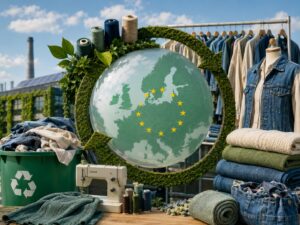
There circular fashion in Europe in 2030 is no longer a niche trend. It is becoming a structured market. An industrial subject. A lever of desirability. A new playing field for the luxuryAccording to the latest projections from KPMG France, carried out with the Circular Fashion Federation, the four pillars of the sector could account for more than 100 billion euros by 2030 in Europe. This figure changes the interpretation of the market. It shows a clear shift. The second hand, there textile repair, there certified resale, THE recycling, rental, reuse, theeco-design These are no longer peripheral issues. They are now central to the business model. They affect profit margins. They influence the image. They alter customer relationships. For fashion houses, this shift is significant. Luxury is based on rarity, quality, craftsmanship, and materials circularity It doesn't contradict these codes. It extends them. A durable piece confirms its value. A repaired bag retains its history. A garment resold with a guarantee maintains its appeal. A traceable product reassures the customer. The real question, therefore, is no longer whether fashion should become circular. The question is more precise: how to do so without losing desirability.
A European market that is changing scale: why does the 100 billion mark matter?
Cape 100 billion euros gives a new depth to the European circular modeThis is no longer a grassroots movement. It's a complete economy. It mobilizes platforms, workshops, repairers, logistics providers, data experts, recyclers, brands, and distributors. The new estimate incorporates several dimensions. Eco-designed products could represent approximately 71 billion euros by 2030The second-hand market should continue to grow. Textile repair is gaining ground. Recycling is becoming more strategic. Each pillar addresses a specific need: producing less, designing better, extending use, recovering materials. For the premium modeThis change is decisive. The customer wants to buy better. They want to understand the origin. They want durable pieces. They also want to retain the pleasure. Environmental constraints are not enough. Style is needed. Service. Trust. A seamless experience. Luxury already has solid advantages: noble materials, workshops, expertise, a culture of repair, and a strong relationship with iconic pieces circular fashion in Europe This allows the houses to prove what they have always claimed: a beautiful object deserves to last.
What circular fashion really encompasses: useful definitions, without jargon
There circular mode This approach encompasses solutions that extend the life of clothing, bags, shoes, and accessories. It also aims to reduce the use of virgin resources. The linear model follows a simple logic: produce, sell, discard. The circular model seeks to preserve value over time. In concrete terms, a circular item must be designed from its inception. It must be durable. It must be repairable. It must be reusable. It must be resalable. It must sometimes be transformed. At the end of its life, it must enter a more clearly defined recycling stream. In the luxury sector, this definition takes on a more nuanced dimension. A garment is not simply an assembly of fibers. A bag is not just leather, thread, or metal. A fashion piece carries a story. It bears the mark of a hand. A patina. A workshop. A signature circularity in luxury It must therefore preserve this intangible value. That's the challenge. The garment must be made more traceable, more repairable, more sustainable. Without making it impersonal. Without confining it to technical jargon. Without erasing the emotion. Circular fashion thrives when it remains desirable.
Why are the projections being revised upwards: is demand finally aligning with supply?
The growth of the circular fashion in Europe This can be explained by a convergence. Demand is increasing. Supply is becoming more professional. Regulations are accelerating. These three forces are now moving in the same direction luxury second-hand has changed its status. It's no longer just a smart purchase. It's becoming a way to access an archive. A limited edition. A rare find. An iconic bag. A collector's coat. The customer isn't just looking for a price. They're looking for a story. They're looking for proof of authenticity. They're looking for reliable service. The repair It is also experiencing a powerful resurgence. It is no longer perceived as a secondary gesture. It is becoming a brand experience. Shoemakers, leatherworkers, dressmakers, tailors, and textile artisans are regaining a central role. Repairing is a way of saying that the object still has value. It's about prolonging the relationship with the homeeco-design fashion It is finally gaining credibility. It is not limited to choosing a more responsible material. It encompasses pattern making, assembly, dyeing, linings, finishes, accessories, and the availability of replacement parts. It requires long-term thinking. It demands planning for the garment's second life from the very first sketch.
European regulation as an accelerator: from compliance to strategy
In Europe, circular fashion is also progressing thanks to legislation. The European Union aims to make textiles more durable, repairable, reusable, and recyclable. This trajectory is part of the European Green Deal. It seeks to combat textile waste, fast fashion, the destruction of unsold goods, and opaque practices. The European regulation oneco-design of sustainable productsThe European Standard for Product Responsibility (ESPR), also known as the European Standard for Product Responsibility (ESPR), is a game changer. It extends the principles of eco-design to almost all goods placed on the European market, including textiles. It introduces criteria related to durability, repairability, reuse, recycled content, and environmental footprint digital product passport This is becoming a key issue. It must allow for reliable information to be associated with each product: materials, origin, composition, care, repair, and end-of-life. This data will help customers, businesses, and authorities. It will also facilitate resale, quality control, and recycling. For the luxury sector, this regulation may be perceived as a constraint. It can also become an advantage. Luxury brands already have control over their suppliers. They work with qualified workshops. They control their materials. They have a culture of attention to detail. Transparency can therefore become a new language of prestige.
Eco-design: when creation anticipates the second life
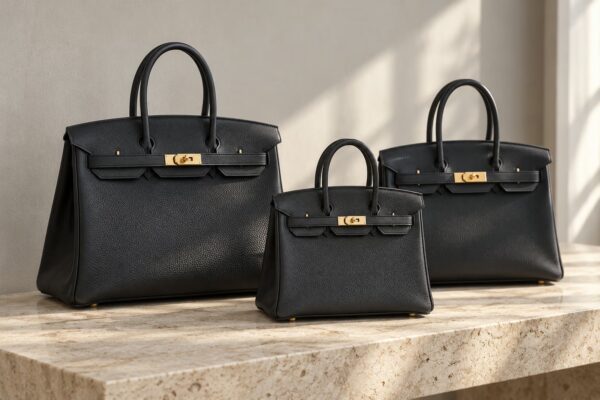
L'eco-design It's not an aesthetic. It's a method. It begins before production. It permeates the design, the choice of materials, prototyping, and quality testing. It forces us to ask a simple question: what will happen to this garment after purchase? A garment designed to last must withstand wear and tear seams must last. Dyes must remain stable. Buttons must be replaceable. Fibers must limit pilling. Linings must be repairable. Accessories must be identifiable. In leather goods, the stakes are even more visible. A circular bag must be able to be maintained. The handles must be replaceable. The corners must be restored. The clasps must be replaced. The lining must be accessible. The structure must retain its integrity. This approach changes the role of the creatorBeauty doesn't disappear. It's enhanced by use. A beautiful piece is no longer just one that catches the eye in a shop. It's one that remains after five years. Ten years. A repair. A resale. A passing down.
Materials, traceability and product passport: luxury put to the test
There textile traceability It is becoming a pillar of circular fashion. Brands must know where their materials come from. They must document the transformations. They must monitor the workshops. They must control the processing. They must also explain these choices digital product passport This data can be transformed into an experience. It can tell the story of a wool's origin, the journey of a leather, the place of manufacture, care instructions, repair options, and return conditions. It can also strengthen authentication in the secondhand market. This proof protects the brand, reassures the customer, limits counterfeiting, simplifies certified resale, and facilitates end-of-life recycling. It also helps avoid vague promises. In a market saturated with responsible marketing rhetoric, data becomes a boundary between image and reality. The challenge remains technical. Some blended materials are pleasant to the touch but difficult to recycle. Some treatments improve durability but complicate end-of-life management. Some finishes offer luxury but hinder circularity. Design must therefore find a balance, without losing its craftsmanship, without losing its drape, and without losing its style.
Rethinking the value chain: from the product sold to the product tracked
There circular mode This transforms the value chain. Previously, the sale often marked the end of the journey. Now, it becomes just one step. After the purchase comes maintenance, repair, trade-in, resale, refurbishment, and sometimes recycling. This model demands a new organization. Products must be collected, inspected, authenticated, cleaned, categorized, restored, and then put back on sale. Each step requires specific standards. Luxury cannot industrialize these services haphazardly. Quality must remain impeccable. A bag returned to the brand must be treated with the same care as a new one. A restored dress must regain an appearance worthy of the brand. A repaired pair of shoes must preserve its comfort, its shape, and its prestige. This approach creates new partners: data experts, resale platforms, refurbishment workshops, returns logistics providers, authentication specialists, and recyclers capable of processing complex materials. The brand must choose what it handles internally, what it outsources, and what it controls.
New business models: resale, repair, rental, regulated trade-in
There certified resale is one of the most visible models. It allows a brand to regain control of its secondary market. It guarantees authenticity. It protects prices. It reassures the customer. It prevents the brand narrative from being carried solely by external platforms luxury repair Repair remains the most natural model. It speaks of craftsmanship. It values the workshop. It strengthens the connection. It provides concrete proof of quality. A company that repairs demonstrates that its pieces are worth the effort. Rental serves other purposes. It can be suitable for events, statement pieces, and distinctive silhouettes. However, it demands great rigor. The products must be robust. Cleaning must be expertly handled. The experience must remain premium. Managed trade-ins are also becoming strategic. They allow customers to return an item. In exchange, they can receive credit, a restoration service, or a resale offer. The brand thus feeds its circular economy. It also learns from the real-life experience of its products.
The new KPIs of desirability: residual value, return, compliance
There circular fashion in Europe This requires new indicators. Sell-through is no longer sufficient. The value of an item is no longer measured solely by the season. It is also measured over time residual value It becomes a strong signal. A piece that resells well confirms its desirability. It shows that the quality holds up. It proves that the style remains current. It also indicates that the market recognizes the iconic item. The circular return rate becomes another indicator. It measures a brand's ability to bring its products back into a controlled circuit. The higher this rate, the more data the brand recovers. It secures authenticity. It feeds its secondary offering. Compliance costs also change status. They are no longer solely administrative. They affect information systems, supplier audits, labeling, material testing, and documentation. Brands that anticipate these changes can transform these costs into an advantage.
Arbitrating without betraying: margin, exclusivity, transparency in the same narrative
Luxury rests on a subtle tension. It must remain rare. It must remain desirable. It must also become more transparent circular mode This raises new questions. A resale offer broadens access, but it mustn't cheapen the brand. A repair strengthens the bond, but it requires workshop capacity. Traceability provides reassurance, but it forces customers to make complex choices. Profit margins often crystallize these tensions. Implementing a circular strategy requires investment: workshops, reverse logistics, digital tools, training, authentication, product data, and customer service. These costs may seem substantial, but the vision must be based on the entire lifecycle. A durable part fosters loyalty. A well-executed repair strengthens attachment. A certified resale captures value that would otherwise go elsewhere. Reliable data facilitates services. Circularity can therefore become a revenue stream, not just an expense. The central point remains emotion. The customer doesn't buy a conforming product; they buy a look, a material, a story, a sense of belonging. Circularity must be part of this promise, not a replacement.
Turning constraints into advantages: a realistic roadmap for housing
The first step is to map the products. Not all items have the same circularity potential. An iconic piece can join a repair, take-back, certified resale program. A seasonal item can aim for better recyclability. A textile item can incorporate clearer care guidelines. The second step concerns data. Without reliable information, circularity remains fragile. Brands must structure their material repositories, harmonize collection from suppliers, and prepare the.. digital product passportLinking product data to customer services. The third step focuses on the experience. A circular service must remain simple. The customer must understand how to repair, where to drop off, how to resell, how to maintain, and what benefits to expect. The journey must be seamless, premium, and consistent with the brand image. The fourth step concerns the workshops. Circularity cannot be decreed; it must be built. It requires trained craftspeople, spare parts, quality protocols, controlled lead times, and a service-oriented culture. Luxury has a natural advantage; it must now make it scalable.
Circular fashion in Europe: a turning point for luxury fashion
There circular fashion in Europe This opens a new chapter for luxury. It compels brands to think beyond the collection. It imposes a longer-term vision. It places materials, craftsmanship, repair, and traceability at the heart of the narrative. This movement does not weaken desirability; it can strengthen it. A piece that lasts becomes more precious. A repaired piece becomes more personal. A piece resold with a guarantee becomes more reassuring. A traceable piece becomes more credible. Luxury fashion has always known how to transform constraint into style. It can do the same with circularity, provided it is not reduced to a mere marketing ploy. Circularity must become proof, a method, a service, a culture. By 2030, the strongest brands may well be those that have grasped one simple truth: luxury is no longer based solely on newness. It is based on longevity, on memory, on trust, on the ability to keep a piece alive far beyond its initial purchase.
Sources:
KPMG France predicts the European circular fashion market could be worth over €100 billion by 2030
Council of the European Union, ecodesign requirements and digital product passport
ADEME, textiles sector for clothing, household linen and footwear
Élise Moreau is the editor-in-chief of Luxe Daily, specializing in haute couture fashion and fine jewelry. With over ten years of experience in the media…