

An iconic department store facing a changing era

In Paris, some places transcend their primary function and become urban landmarks. BHV Marais, located opposite City Hall, belongs to this category of stores that reflect both a way of consuming and a way of inhabiting the city. However, the era when the department store alone was enough to structure the flow of people, the desirability, and the profitability of a building is gradually fading. Between evolving consumer habits, competitive pressure, the resurgence of tourism, and the rise of digital technology, the "retail-only" approach is showing its limitations in the most strategic locations.
The transformation project for BHV Marais, announced in the context of its acquisition by the Canadian fund Brookfield Asset Management, is part of this fundamental shift. The idea of a hybrid space, combining a luxury hotel and retail areas designed as flagship stores, acts as a catalyst. It reveals something about Paris today: a capital where real estate reigns supreme, where hospitality is becoming a major driver of value creation, and where brands seek venues capable of captivating both international visitors and discerning local customers.
Brookfield Asset Management: the logic of an investor in a scarce asset
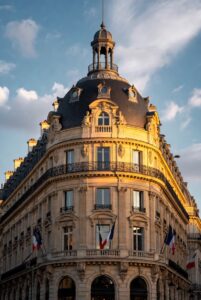
To understand the anticipated transformation, one must adopt the perspective of an owner-investor. Brookfield Asset Management operates globally in real assets, employing a discipline that combines long-term management with value creation. In a district like the Marais, land scarcity and the symbolic power of the address make the decision particularly sensitive: the objective is not simply to fill square meters, but to orchestrate a destination capable of supporting high rents and stable occupancy rates.
In this context, the central question becomes that of the "best use" of a building. A department store, even an iconic one, carries heavy operating costs and is subject to the consumer cycle. Conversely, a high-end hotel provides recurring revenue, the ability to smooth out seasonality, and often a more favorable property valuation. Hybridization, by combining hospitality and retail, aims to amplify their strengths: the hotel generates qualified foot traffic, the retail sector monetizes this traffic, and the combination transforms a building into a destination.
Why is the hotel + retail hybrid becoming essential in capital cities?
The term "hybridization" here refers to a programmatic combination: several uses, conceived together, share the same space. In capital cities with high tourist intensity, this strategy responds to a simple reality: visitors' available time is limited, their attention is competing, and the experience is as important as the purchase. A hybrid destination promises continuity between accommodation, exploration, gastronomy, shopping, services, and culture. It aligns with the expectations of a clientele accustomed to comprehensive destinations where one can spend an entire day, not just complete a transaction.
Luxury acts as an accelerator. Upscale hotels, in particular, function as a service platform. Concierge services, spas, restaurants, personalized welcome, partnerships with brands: everything can be connected to an experiential retail experience. Brands find a favorable context to showcase their expertise, organize product launches, offer exclusive pieces, and strengthen ties with an international clientele. At the building level, hospitality also provides control over perceived quality, security, and comfort—key elements for moving upmarket.
From department store to "destination place": a recomposition of spaces
Transforming a department store isn't simply a matter of changing the signs. It involves a complete rethinking of the layout, circulation, and floor plans. Historically, department stores have been organized by departments, multiplying the offerings to meet every need. However, this model is being challenged by online overabundance and the desire for simplicity. In a flagship store approach, the space becomes more curated: fewer items, more emphasis on presentation, textures, volumes, architectural signatures, and high-value services.
The term "flagship" deserves a quick definition: it refers to a showcase store, more akin to a brand manifesto than a standard retail outlet. Investments are made in interior architecture, scenography, training, and sometimes workshops or private spaces. A hybrid project at BHV Marais could thus transform certain floors into premium themed hubs, with boutique-style shops or corners that resemble boutiques, and layouts designed to extend the visitor's time. The focus shifts from simply passing through to a destination.
What this means for brands: fashion, jewelry, beauty and lifestyle
For luxury brands and fashion labels, theappeal of a "new generation" BHV Marais lies in a promise: a flow of both tourists and locals to a neighborhood where people come to stroll, dine, visit, and shop. A luxury hotel integrated with or attached to a premium retail space reinforces this flow by making it more predictable and more discerning. The hotel's clientele, often international, consumes experiences and services. They are also sensitive to seamless journeys: personalization, delivery, tax refunds, private appointments, packaging, and alterations.
For jewelry and watchmaking, the challenge is twofold. On the one hand, security and the environment are as important as the storefront. On the other, the ability to offer a private reception, private lounges, and appointment booking is becoming standard. A hybrid space can combine various services: access control, concierge services, event spaces, and premium services. The beauty industry, meanwhile, particularly benefits from experiential formats: consultations, treatment rooms, masterclasses, and exclusive offerings. As for the art of living, it can reinvent itself around materials and crafts, from wood to textiles, from design to tableware, with a narrative closer to curated collections than to mere accumulation.
Rent, choice of retailers and moving upmarket: the economic equation
A premium repositioning has direct consequences for the local economy. The often extensive renovations require significant investment, and "luxury real estate" is financed by projected higher revenues. In a hotel + retail setup, rents can fluctuate, as can contractual terms. Brands able to afford high rents will expect exceptional visibility, high customer traffic, and a cohesive environment in return. This leads to a stricter selection of retailers and a reduction in space allocated to overly general or promotional offerings.
This move upmarket doesn't necessarily mean uniformity. In the Marais, a neighborhood of contrasts and creativity, success often hinges on the balance between desirability and individuality. A hybrid BHV Marais could therefore leverage a layered approach: established brands in prominent window displays, emerging brands in pop-up shops , occasional collaborations , service and repair areas, and a high-quality culinary offering . But the balancing act remains delicate: every square meter must justify its value, and each brand choice reflects something about the identity of the place.
Parisian competition: Printemps, Galeries Lafayette, Samaritaine and the race for experiences
BHV Marais doesn't operate in isolation. Paris is one of the world's most competitive markets for premium retail, driven by massive tourist flows and an exceptional concentration of brands. Galeries Lafayette Haussmann has solidified its status as a destination, combining heritage, dining, events, and services for international visitors. Printemps, for its part, has launched numerous initiatives to enhance the visitor experience, while cultivating a more sophisticated approach to fashion.
La Samaritaine, relaunched with a luxury hotel component and a strong experiential focus, has also made a lasting impression: it perfectly illustrates the logic of hybridization and real estate development in service of a narrative. Within this context, the transformation of BHV Marais can be seen as a strategic response. It aims to reposition an iconic asset, reaffirm its place on the map of shopping destinations, and offer an alternative consistent with the Marais' identity: less "boulevard," more neighborhood, more lifestyle-oriented, but with the hallmarks of high-end retail.
The Marais as a laboratory: effects on the neighborhood, flows and daily life
A project of this scale inevitably transforms its surroundings. The Marais district, already experiencing intense commercial and tourist activity, could see some flows concentrate even more around the BHV department store, with repercussions for neighboring restaurants, cultural venues, and shops. A luxury hotel brings arrivals and departures, services, vehicles, and expectations of tranquility and quality of service. It can also encourage more consistent occupancy, beyond the weekend peaks.
The ever-sensitive question in Paris is that of the balance between the city as a place to live and the city as a destination. A BHV Marais department store that becomes a premium destination can contribute to the revitalization of the area, improve certain infrastructures, and enhance the sector's appeal. But it can also increase pressure on commercial rents and contribute to the sociological transformation of the neighborhood. The challenge for a hybrid space, therefore, is to remain permeable: offering services for residents, accessible pathways, and programming that isn't simply a showcase for tourists, even though they represent a crucial part of its profitability.
Architecture, heritage and experience: expectations surrounding a metamorphosis
Transforming a building associated with the history of Parisian commerce requires particular attention to architecture and heritage. In the luxury sector, the quality of materials and the precision of details are hallmarks of credibility. Stone, wood, metal, glass, textiles, lighting: everything contributes to the final impression. But architecture is not merely decoration. It organizes sequences, creates breathing spaces, facilitates orientation, and encourages discovery. A successful journey makes people want to go upstairs, stay longer, and return.
The experience itself is as much about what's visible as what's invisible. Queue management, thermal comfort, acoustics, signage, multilingual reception, seamless payment, efficient pickup and delivery logistics, tax refunds: these are the details that, taken together, make the difference between a place that's frequented and a place that's truly appreciated. In a hotel + retail model, these standards can be raised, as the hotel industry imposes service requirements that have a ripple effect on the retail side. It's often through this aspect that loyalty is built, far more so than through an abundance of products.
The new pact between real estate and retail: what the BHV case reveals
Beyond the BHV Marais department store, the trend highlights a shift: in prime locations, real estate no longer simply houses retail, but shapes and finances it. The owner becomes a key player in the planning, a strategist of usage, and sometimes a partner of the brands. There is increasing talk of "placemaking," the art of creating a space with an identity, a community, a calendar, and reasons to be frequented. In this framework, retail is one component among many, alongside hotels, restaurants, and events.
For brands, this evolution demands new skills. Simply opening a store is no longer enough; it's necessary to produce content, train teams capable of providing top-tier service, invent experiences, and collaborate with artisans, designers, chefs, and artists. Professional roles are converging: architects, scenographers, retail directors, hoteliers, CRM specialists, and tourism data experts. The success of a hybrid BHV Marais will depend on this orchestration and the ability to remain true to the Parisian spirit: high standards, refined taste, diversity, and attention to detail.
What visitors and Parisians can expect from a hybrid BHV Marais
For the public, the most tangible promise is that of a more legible and pleasant space. A department store can become intimidating when it stretches out with aisles lacking hierarchy. Transforming it into a hybrid destination can offer a better selection, more open spaces, clearer services, and an element of discovery. Visitors could find pop-ups, product launches, beauty experiences, exhibitions, or collaborations, while Parisians could benefit from enhanced practical services, such as repairs, personalization, or a more curated home and design offering.
One essential expectation remains: coherence. In the Marais, people come as much for the atmosphere as for shopping. If the luxury hotel and flagship stores simply pile on premium features, the area risks losing what makes it unique. Conversely, if the transformation manages to combine heritage, modernity, service, and curated selection, it can restore BHV Marais to its central role: that of a crossroads between the neighborhood's energy and the excellence of a global capital of luxury.


