Viktor & Rolf enters a new strategic phase

Viktor & Rolf is opening a new chapter. The haute couture house founded by Viktor Horsting and Rolf Snoeren is now fully owned by the OTB Group. A significant move. A clear signal in the world of luxury fashion.
OTB already held a large stake in the company. The Italian group is now taking a further step, acquiring 100% ownership. This decision confirms a long-term strategy and strengthens Viktor & Rolf within a portfolio of highly creative brands.
The news comes at a sensitive time for the luxury sector. Fashion houses are seeking greater stability. Groups want to secure their creative assets. Brands with strong identities are becoming increasingly valuable. In this context, Viktor & Rolf possesses a unique profile: conceptual couture, an instantly recognizable signature, and a rare brand power.
The OTB group strengthens its link with Viktor & Rolf
The OTB Group, founded by Renzo Rosso, has been supporting Viktor & Rolf for several years. The relationship is not new. OTB acquired a majority stake in 2008. The group then increased its position in 2019, holding 70% of the capital.
With this latest acquisition, OTB buys out the remaining shares. The company thus fully integrates into its ecosystem. A logical decision. A consistent one, too. The group aims to support brands with strong personalities. Diesel, Maison Margiela, Marni, Jil Sander, and now Viktor & Rolf share the same energy: expressive fashion, creative freedom, and often a radical identity.
The full acquisition allows OTB to better manage the brand's future. It offers greater strategic coherence. It can also facilitate investments: retail development, image, haute couture, licensing, communication, customer experience—the levers are numerous.
Viktor Horsting and Rolf Snoeren remain in their artistic directorships
The central focus of this operation remains creative continuity. Viktor Horsting and Rolf Snoeren remain at the artistic helm of the house. This stability is crucial. It protects the brand's DNA. It also reassures customers, partners, and fashion observers.
Since 1993, the Dutch duo has been developing a highly personal style. Their fashion speaks of art, volume, irony, and conceptual glamour. Each collection resembles a staged idea. Each silhouette becomes a manifesto.
Retaining the founders avoids a sudden break. It allows OTB to consolidate without altering its core identity. It's a delicate balance. In fashion, an acquisition can sometimes dilute a brand's spirit. Here, the message seems different. The group wants to strengthen Viktor & Rolf, not smooth over its distinctiveness.
A fashion house founded on the concept

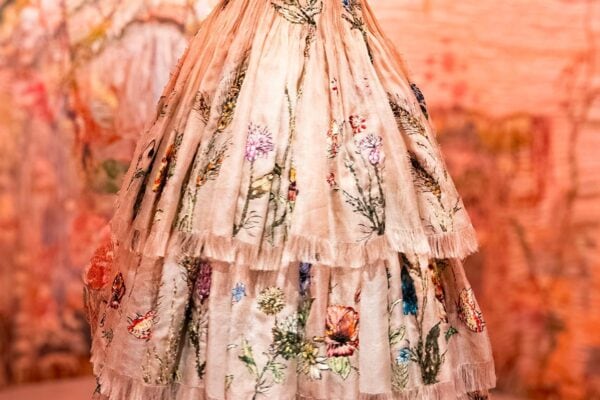
Viktor & Rolf is not a fashion house like any other. Its territory is based on surprise. Subversion. Theatrical construction. Dresses become sculptures. Volumes tell a story. Couture becomes a visual language.
The house has often used fashion as a laboratory. It plays with the codes of clothing. It questions the silhouette. It transforms the runway show into a performance. This approach has fueled its international reputation.
In a market dominated by bags, sneakers, and easily marketable items, Viktor & Rolf retains a more symbolic value. Its strength lies in its image. In its tailoring. In its pure creation. In its ability to make fashion speak beyond the product itself.
This is precisely what might interest the OTB group. The group already owns brands with a strong visual identity. Maison Margiela is one of the most obvious examples. With Viktor & Rolf, OTB further strengthens its position in the experimental luxury market.
OTB, a group built on distinctive brands

The OTB group stands for Only The Brave. The name itself hints at a direction. Renzo Rosso built his group around strong, often unconventional brands. Diesel established a popular, rebellious, denim-centric vision. Maison Margiela cultivates anonymity, conceptualism, and deconstruction. Marni works with an artistic, colorful, and intellectual aesthetic. Jil Sander embodies a form of refined minimalism.
Viktor & Rolf finds a natural place in this portfolio . The house shares this idea of free fashion. Fashion that doesn't just seek to please. Fashion that wants to tell a story, provoke, and shift perspectives.
OTB doesn't play exactly the same tune as the major luxury conglomerates. The group focuses more on creativity, artistic independence, and the unique character of its brands. This strategy could become an asset, especially at a time when many brands look alike.
Why does this acquisition matter for luxury fashion?
complete control of Viktor & Rolf goes beyond a simple capital transaction. It says something about the market. Groups want to secure creative brands. Founding talents are becoming strategic. Strong identities are valuable.
In luxury fashion, differentiation is becoming more difficult. Trends circulate quickly. Images are copied. Consumers can spot overly polished messaging. A brand like Viktor & Rolf therefore has an advantage: it doesn't resemble the others.
This unique quality can fuel several dimensions: haute couture, collaborations, content, fragrances, immersive experiences, digital, archives, and storytelling. The OTB group can transform this creative power into a more structured growth driver.
Haute couture as an image driver
At Viktor & Rolf, haute couture plays a central role. It is not merely a prestigious activity; it shapes the brand's identity, nourishes its image, and provides compelling content for the media, social networks, and international clients.
Viktor Horsting and Rolf Snoeren's couture collections often function as visual narratives. They leave a lasting impression through spectacular volumes, powerful messages, and unexpected constructions. Their impact extends far beyond the catwalk.
For OTB, this couture can become a tool for enhancing its image. It helps maintain the brand's presence in the realm of luxury. It creates desirability. It supports licensing agreements. It also nurtures the brand's cultural value.
Perfumes, a major pillar of Viktor & Rolf's renown
It's impossible to talk about Viktor & Rolf without mentioning perfumery. Fragrances like Flowerbomb and Spicebomb gave the brand global visibility. They broadened its audience. They transformed a highly conceptual couture universe into a more accessible signature.
The fragrance license remains linked to L'Oréal Luxe. This is an important point. It shows that the brand's growth rests on several pillars. On the one hand, haute couture enhances the image. On the other, fragrances ensure a broader commercial presence.
This complementarity can become a powerful asset. The fragrance translates the Viktor & Rolf universe into everyday life. The couture maintains the artistic aura. OTB can therefore work on the brand on two levels: scarcity, then widespread availability.
A challenge of stability in a period of great creative movement
Fashion is going through a period of instability. Artistic directions are changing rapidly. Fashion houses are searching for a new lease of life. Groups are testing repositioning strategies. Consumers are observing closely, sometimes with suspicion.
In this context, the continuity between Viktor Horsting and Rolf Snoeren is a strength. The duo provides a point of reference. They embody the brand. They guarantee a consistent style.
This stability can also help OTB build a strategy less dependent on the short term. The house doesn't need to become a mass-market brand. It must preserve its impact. Its rarity. Its visual sophistication. Its couture value.
What levers can be used for the development of Viktor & Rolf?
The complete acquisition opens up several avenues. The first concerns image. Viktor & Rolf possesses a strong archive. This can inform exhibitions, content, editorial projects, and digital activations.
The second approach involves selective retail. The brand can strengthen highly targeted points of contact. Not necessarily a large network, but rather locations consistent with its brand identity—spaces capable of telling the story of couture, fragrance, accessories, and design.
The third avenue concerns collaborations. Viktor & Rolf know how to create memorable images. This strength can generate limited-edition projects that are highly desirable and highly publicized.
The fourth avenue relates to digital. A house with such a visual style can gain traction on social media platforms. Its silhouettes function like viral moments. Its couture already possesses the theatricality demanded by the attention economy.
The risk: growing up without losing one's strangeness
The main challenge will be to grow Viktor & Rolf without trivializing its vision. The brand must remain strange, poetic, and conceptual. Too much standardization could diminish its charm.
OTB will therefore have to find the right rhythm. Support growth, but preserve freedom. Develop products without betraying the couture spirit. Strengthen visibility without turning the brand into a mere logo.
This tension affects many creative houses. How do you monetize a strong identity without exhausting it? How do you make a brand more accessible without making it ordinary? How do you speak to a new generation without losing your existing customers?
For Viktor & Rolf, the answer will likely lie in a selective strategy. Controlled growth. Consistent products. Powerful experiences. And tailoring always at the heart of it.
Viktor & Rolf, a valuable creative asset for the OTB Group
With this full acquisition, the OTB Group strengthens its position in creative luxury. It adds stability to a brand already established within its ecosystem. It also confirms its commitment to protecting strong brands.
Viktor & Rolf represents more than a brand. It's a creative entity. A universe. An archive. A visual language. A founding duo still active today. In today's luxury landscape, this combination is highly valuable.
The market loves brands that can create meaning, not just products. Viktor Horsting and Rolf Snoeren know how to create lasting images, silhouettes that circulate, and concepts that leave a mark.
For OTB, the challenge will therefore be to transform this artistic strength into a sustainable strategy. Without breaking the mystery. Without softening the audacity. Without losing what makes Viktor & Rolf unique.
A new chapter for Viktor & Rolf
Viktor & Rolf 's acquisition by the OTB Group marks a significant milestone. It confirms a long-standing relationship, secures the brand's future, and keeps the founders at the heart of the creative process.
This operation also reveals a broader trend. Luxury increasingly values brands with a strong identity. Houses capable of existing through a vision, an archive, a clear aesthetic, and a unique voice.
Viktor & Rolf possesses all of this. Conceptual couture. A recognizable history. Iconic fragrances. A founding duo. A unique place in contemporary fashion.
With OTB, the house enters a phase of consolidation. It remains to be seen how this new stage will fuel its development. One thing seems certain: fashion still needs houses capable of surprising. Viktor & Rolf is one of them.
Sources
- Journal du Luxe: "The OTB group takes full control of Viktor & Rolf.".
- FashionNetwork France: "OTB increases its stake in Viktor&Rolf to 100%".
- Luxury Tribune: "Viktor & Rolf and the Italian group OTB extend their strategic alliance for 5 years.".