Tanning: From a former social stigma to a beauty ideal
Long associated with outdoor work and the working classes, a tan became, during the 20th century, a symbol of holidays, vitality, and social success. A dramatic cultural shift whose influence remains visible in advertising, fashion, tourism, and beauty trends.
By 2026, however, the equation becomes more complex. A golden tan remains desirable, but our understanding of the effects of ultraviolet radiation has never been more precise. Sunburn, pigmentation spots, loss of firmness, premature aging , and skin cancers now necessitate a distinction between aesthetic radiance and sun exposure. Therefore, a crucial question arises: can we still pursue a tanned complexion without sacrificing our skin health?
For centuries, skin color served as a social marker. In European societies, a fair complexion often indicated a life sheltered from agricultural work and outdoor activities. Covering clothing, gloves, hats, and parasols helped maintain this paleness, which was associated with affluence.
Conversely, sun- tanned skin could indicate prolonged occupational exposure. The tan was not sought after; it was something endured.
Industrialization and the gradual emergence of leisure activities would overturn this interpretation. As working-class labor shifted, in part, from the fields to factories and enclosed spaces, pale skin ceased to be exclusively associated with wealth. Travel, seaside holidays, and free time became new markers of privilege.
The tan then changes sides: it no longer speaks of work, but of holidays.
Did Coco Chanel really invent the fashion of tanning?
Coco Chanel is frequently presented as the woman who popularized the tanned complexion in the 1920s. Legend has it that the designer returned from a stay on the French Riviera with a tanned complexion, immediately inspiring her admirers to adopt this new look.
The historical reality is more nuanced. Gabrielle Chanel probably did not single-handedly create the fashion for tanning. Rather, she embodied a transformation already underway: the rise of seaside leisure, the development of sporting activities, the evolution of swimsuits, the influence of the hygiene movement, and the progressive liberation of the female body.
His fame, however, gave considerable power to this aesthetic. In his wake, the golden complexion became modern, adaptable, and cosmopolitan. In 1927, Jean Patou notably marketed Huilede Chaldée, often presented as one of the first perfumed sun oils designed to complement tanning.
From the 1930s onwards, and then with the rise of paid holidays in France, the beach gradually became accessible to a wider public. Tanning, once a distinctive feature, became more widespread.
Why does a tanned complexion remain so desirable?
Theappeal of a tan is not solely based on color. It is laden with social, emotional, and aesthetic meanings.
A tan gives the impression of a more even complexion
A deeper tan can visually soften redness, make contrasts less visible, and give the impression of smoother skin. A tancan also accentuate facial and body contours, which explains its recurring presence in the worlds of fitness, fashion , and photography.
This effect is, however, primarily optical. It does not mean that the skin is healthier.
He talks about holidays and letting go
A golden tan spontaneously evokes the sea, travel, long summer days, and time spent away from professional constraints. In the collective imagination, a tan thus becomes the visible trace of a desirable experience.
This association explains why tanning continues to function as a lifestyle marker, even when its risks are known.
Social media amplifies the solar ideal
Instagram, TikTok , and other visual platforms favor bright, high-contrast, and instantly appealing images. Warm filters, beach destinations, and "summer body" content maintain a very homogenous representation of summer beauty.
The phenomenon is reinforced by influencers, models, celebrities and content creators who sometimes present tanning as the final step in a physical transformation.
But social media also promotes an opposing movement: that of real skin, acceptance of different skin tones and a beauty less dependent on seasonal standards.
What actually happens when skin tans?
Tanning treatment . It is a defense reaction of the skin against damage caused by ultraviolet radiation.
Under the influence of UV radiation, melanocytes produce more melanin, a pigment that is then distributed to the superficial cells of the epidermis. This pigmentation absorbs some of the radiation and gradually gives the skin its color.
But this protective mechanism remains limited. Tanned skin remains vulnerable, and cellular damage can begin even before the appearance of a visible sunburn.
In other words, tanning is evidence of a reaction of the skin to UV rays; it does not prove that the skin can withstand exposure without damage.
UVA and UVB: what are the differences for the skin?
Not all ultraviolet radiation that reaches the skin produces the same effects.
UVB rays, the main cause of sunburn
UVB rays act primarily on the epidermis. Their intensity varies greatly depending on the season, time of day, altitude, and geographical location.
They are closely linked:
- to redness;
- to sunburns;
- to DNA damage;
- to the development of skin cancers.
A sunburn is therefore not simply a temporary irritation. It corresponds to an inflammatory reaction caused by damage to skin cells.
UVA rays, major players in photoaging
UVA rays penetrate deeper into the skin, reaching the dermis in particular. They are present throughout the day and can pass through some types of glass.
They contribute to the breakdown of collagen and elastin, promoting:
- premature wrinkles;
- skin laxity;
- brown spots;
- loss of elasticity;
- the progressive alteration of skin texture.
UVA rays also play a role in the risk of skin cancer. Therefore, effective sun protection must cover both UVA and UVB rays.
What are the risks of repeated sun exposure?
The effects of the sun do not depend solely on exceptional exposure. The doses of UV received throughout a lifetime are cumulative.
The immediate effects
In the short term, exposure can cause:
- a sunburn ;
- a sensation of heat or burning;
- skin dehydration;
- an allergic or photosensitive reaction;
- eye injuries;
- an aggravation of certain dermatoses.
Children, fair-skinned individuals, individuals with many moles, and those taking certain photosensitizing medications require special attention.
Premature skin aging
The sun is one of the main external factors in skin aging. These changes are referred to as photoaging to distinguish them from natural chronological aging.
Repeated exposure gradually promotes:
- an uneven complexion;
- solar lentigines or "sun spots";
- drier skin;
- deep wrinkles;
- a loss of density;
- a decrease in firmness.
This reality explains why daily sun protection now occupies a central place in premium skincare routines and in the discourse on skin longevity at Clarins.
Skin cancers
Natural and artificial UV radiation is a major risk factor for skin cancers. Among them, melanoma is less common than some other carcinomas, but it can be particularly aggressive.
The National Cancer Institute estimates that there will be 17,922 new cases of cutaneous melanoma in metropolitan France in 2023. Early detection improves treatment options.
Any new lesion, any mole that rapidly changes shape, color, or size, or any wound that does not heal warrants medical advice.
Do people with dark skin also need to protect themselves?
A naturally higher pigmentation provides partial protection against some effects of UV rays, but it does not constitute a total barrier.
Darker, brown, and black skin tones can also:
- suffer sunburn;
- develop pigment spots;
- exhibit UV-related aging;
- develop skin cancer;
- to suffer from eye damage.
Prevention efforts must therefore target all skin tones. Furthermore, on darker skin, some lesions may be diagnosed later when they are wrongly considered impossible.
Sun protection is not a ritual reserved for fair skin: it is a universal skin health practice.
Are UV tanning beds safer than the sun?
No. Artificial tanning booths are not a safe alternative to sun exposure.
These devices can deliver high-intensity UVA rays. The doses received add to those from the sun and contribute to DNA damage, premature skin aging, and the risk of skin cancer.
The French Agency for Food, Environmental and Occupational Health & Safety (ANSES) indicates that exposure to devices emitting artificial UV radiation is associated with an increased risk of melanoma. This risk increases even more when the practice begins at a young age. For several years, the agency has recommended ending the public's exposure to artificial UV radiation for cosmetic purposes.
Do UV tanning beds prepare the skin for the sun?
No. An artificial tanning session is neither an effective preparation for holidays nor a prevention of sunburn.
Artificial UV rays add an extra dose of exposure. They are not a substitute for shade, clothing, hats, or sunscreen.
They also do not provide any lasting aesthetic benefit: the color obtained fades, while biological damage can accumulate.
What does French regulation stipulate?
The decree of December 27, 2013, which mainly came into force on January 1, 2014, regulates the sale and provision of tanning devices.
It includes, in particular:
- the prohibition of access to those under 18 years of age;
- supervision by a qualified person;
- the provision of protective eyewear;
- the display of health warnings;
- technical inspection of equipment;
- the ban on presenting artificial UV radiation as beneficial to health.
Commercial practices that encourage repeated consumption, such as certain promotions or discount formulas, are also subject to restrictions.
Self-tanner, spray tan, makeup: what are the UV-free alternatives?
Achieving a golden tan doesn't necessarily mean exposing your skin to ultraviolet rays. Several solutions now exist to achieve an aesthetically pleasing result without triggering a biological tan.
| Method | UV exposure | Approximate duration | Sun protection |
|---|---|---|---|
| Sun | Yes | Variable | No |
| Tanning booth | Yes, at high intensity | Variable | No |
| Self-tanner | No | A few days | No |
| Spray tan | No | About a week | No |
| bronzing makeup | No | Until makeup removal | No |
Self-tanners
Self -tanners generally contain dihydroxyacetone, or DHA. This molecule reacts with amino acids present in the superficial layers of the skin and gradually creates a brown color.
Unlike sun tanning, this phenomenon does not involve increased melanin production under the action of UV rays.
Self-tanners come in different forms:
- mousse ;
- lotion;
- cream;
- serum;
- spray;
- drops to mix with a treatment;
- face mist.
The new generation of formulas offers finer textures, progressive shades and undertones better suited to different skin tones.
Professional spray tan
Spray tanning works on the same principle of superficial coloring. The product is diffused as a mist onto the body to achieve an even result.
This technique avoids UV exposure, but some precautions are still necessary: protect the eyes and mucous membranes, avoid inhaling the mist and choose an establishment applying a rigorous protocol.
Bronzing makeup
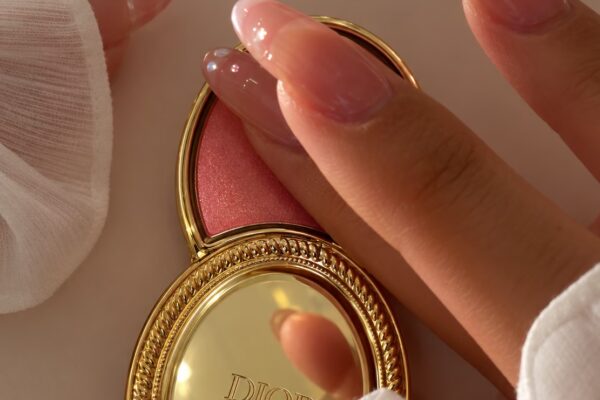
Powders, sticks, tinted creams and highlighters allow you to temporarily warm up your complexion without altering your natural pigmentation.
This approach aligns with current makeup trends: less transformation, more transparency, and a radiance created by light. The K-Makeup aesthetic and luminous skin perfectly illustrate this evolution.
Are self-tanners completely risk-free?
Self-tanners avoid UV damage, making them preferable to the sun or tanning beds when the goal is purely aesthetic.
However, they can cause irritation or an allergic reaction in some people. A test on a small area is recommended before first use, especially on sensitive or reactive skin.
It's also essential to remember one key rule: self-tanner does not protect against the sun, unless a separate product explicitly states a sun protection factor (SPF). Even then, sunscreen must be applied liberally and reapplied regularly.
The resulting color can give the illusion of already protected skin. It should never lead to prolonged exposure.
How to apply self-tanner without streaks?
Success depends more on preparation than on the quantity of product.
1. Exfoliate in moderation
A gentle exfoliation the day before helps remove dead skin cells that could otherwise retain more product. Pay particular attention to elbows, knees, ankles, and heels, being careful not to irritate the skin.
2. Moisturize dry areas
A thin layer of moisturizer on rough areas prevents excessive staining. However, the skin must be clean and dry before application.
3. Work gradually
It's best to apply a thin, even layer, then intensify the result with a second application. Gradual formulas reduce the risk of harsh lines.
4. Wash your hands
The palms, cuticles, and spaces between the fingers can quickly become discolored. An applicator glove makes it easier to distribute the product over the body.
5. Maintain sun protection
The next day, the complexion appears golden, but the skin remains as sensitive to UV rays as before application.
How to enjoy the sun while protecting your skin?
No single cream can guarantee the safety of prolonged sun exposure. Sun protection relies on a combination of behaviors.
Avoid the hours when UV rays are most intense
In mainland France, official recommendations advise seeking shade and avoiding sun exposure as much as possible between noon and 4 p.m. in summer. The perceived temperature is not a reliable indicator. UV levels can be high when it is cool, when the sky is slightly overcast, or at high altitudes.
Making clothes the first line of defense
Protective clothing, a wide-brimmed hat, and appropriate sunglasses offer more consistent protection than insufficient sunscreen. For children, prolonged activities near water particularly warrant the use of UV-protective clothing.
Choose broad-spectrum protection
The product must protect against UVB rays, indicated by the SPF rating, but also against UVA rays. A minimum SPF of 30 is generally recommended when the skin cannot be covered. An SPF of 50 or 50+ is particularly relevant for fair skin, children, areas with high sun exposure, or situations with a high UV index.
Apply a sufficient amount
The performance indicated on the packaging assumes a generous and even application. A layer that is too thin significantly reduces the actual protection. The product should be reapplied approximately every two hours, and also after swimming, heavy perspiration, or towel drying. Sunscreen remains a supplementary protection: it should never be used to intentionally prolong sun exposure.
Is tanning no longer considered proof of beauty?
A tanned complexion will probably not disappear from the aesthetic imagination. It is too deeply associated with summer, travel, and a certain idea of carefree living.
However, its meaning is evolving.
Contemporary luxury no longer values only an immediately visible transformation. It focuses on the quality of the skin over time: hydration, balance of the skin barrier, prevention, evenness of complexion and resistance to external aggressors.
This transformation is also evident in the rise of skin longevity, personalized diagnostics and microbiome research, analyzed in our dossier on beauty in the age of biotechnology.
Natural beauty is not about renouncing aesthetic pleasure. It's about no longer confusing a temporarily attractive appearance with a sign of good health. This philosophy aligns more broadly with the return to a luxury of simplicity, based on quality, moderation, and longevity.
Three common misconceptions about tanning that you should abandon
"Tanned skin is healthy skin."
False. Tanning is a defense reaction against UV rays. The golden appearance does not allow us to assess the biological state of the cells.
"Once I'm tanned, I'm no longer at risk of sunburn."
False. The protection provided by tanning remains weak and does not replace any preventive measures.
"A few sessions in the treatment room before the holidays prepare the skin."
False. Artificial UV doses are added to natural UV and increase cumulative exposure.
Frequently Asked Questions about Tanning
Is it possible to tan without damaging your skin?
Any tan obtained from UV rays is a reaction of the skin to radiation. Therefore, there is no such thing as a completely damage-free suntan. To achieve a tan without UV exposure, self-tanners and makeup are the best options.
Does a tan naturally protect against the sun?
Very slightly. Even tanned skin can still burn and suffer damage from UVA and UVB rays. Protective measures remain essential.
Does an SPF 50 rating prevent tanning?
A high SPF reduces the amount of UVB rays reaching the skin, but no sunscreen blocks all radiation. Do not reduce the amount applied in the hope of tanning faster.
Are UV tanning beds allowed in France?
Yes, but they are strictly regulated and prohibited for those under 18. Their authorization does not mean they are safe. French health authorities advise against their use.
Can you use self-tanner on your face?
Yes, provided you choose a formula suitable for the face, follow the instructions, and perform a patch test beforehand if you have sensitive skin. The eye area, lips, and mucous membranes should be avoided.
Does self-tanner protect against sunburn?
No. The color created by self-tanner does not provide significant protection against UVA or UVB rays. Separate sunscreen is still necessary.
A healthy complexion, the new ideal of luxury beauty
The quest for a tan reveals a very contemporary tension: wanting to appear rested, radiant and healthy while sometimes adopting a behavior that precisely weakens the skin.
The future of beauty could resolve this paradox by shifting the focus of desire. No longer seeking darker skin at all costs, but rather skin that is more even, comfortable, protected, and radiant.
In this new aesthetic language, luxury no longer lies in accumulating hours of exposure. It lies in mastery: choosing shade, applying sunscreen, preserving your skin, and using, when a tan is desired, solutions without ultraviolet radiation.
True radiance may not be the fleeting glow the sun leaves on the face. It's the radiance of skin that's cared for early enough to remain beautiful for a long time.
Official French sources
- National Cancer Institute – How to better protect yourself from the sun?, updated May 5, 2025.
- ANSES – Tanning booths: ANSES reiterates the proven risk of skin cancer, October 10, 2018.
- Legifrance – Decree No. 2013-1261 of 27 December 2013 relating to devices using ultraviolet radiation.
This article provides general information and is not a substitute for the advice of a doctor or dermatologist.