Rabanne after Julien Dossena: a revealing turning point in artistic direction
Elise MoreauJune 29, 202612 minFashion
A brief announcement, a strong signal for the luxury ecosystem
On June 24, 2026, Rabanne officially announced the end of its collaboration with Julien DossenaThe announcement remains understated. Yet its significance extends far beyond the mere news of a fashion house. After thirteen years at the helm of creative direction, the designer's departure marks the beginning of a pivotal period. Rabanne must preserve its identity. The brand must also prepare its next chapter. In the luxury sector, a change in artistic direction acts as a signal. It alters buyers' expectations. It fuels conversations in the studios. It reignites questions from clients, investors, and the media. Succession is never simply a matter of a name. It reveals a choice of model. Continuity. Rupture. Product refocusing. New cultural ambition. Each option redefines the house's place. Rabanne moves forward with a powerful legacy. Metal. Knitwear. Shine. Futurism. Liberated body. These codes have a rare visibility in the Parisian fashion scene. Julien Dossena breathed new life into this universe. He avoided the trap of nostalgia. He made the house more desirable. More wearable. More present in pop culture.
What an artistic director actually changes at a house like Rabanne
The artistic director doesn't just create clothes. They build a vision. They organize volumes. They choose materials. They define a silhouette. They set the tone for the communication. At Rabanne, this role is of particular importance. The house is built on an instantly recognizable signature: metal dresses, discs, chains, reflections, plays of light. The next designer will have to master this vocabulary. They will also have to avoid repeating it. A fashion house cannot live solely on its archives. Artistic direction influences the runway. It also shapes the accessories. It can inspire merchandising. It gives direction to campaigns. It enriches the in-store experience. The role thus becomes strategic. A good collection attracts attention. A coherent vision builds value over several seasons. For Rabanne, the next step will require an accurate understanding of the times. The market expects statement pieces. It also seeks easy-to-wear clothing. It wants accessories that can last beyond a single runway show.
Continuity or rupture: the balance that determines desirability
In fashion, the desirability in luxury It rests on a delicate balance. The brand must remain recognizable. It must also surprise. Continuity is reassuring. It protects loyal customers. It preserves visual codes. It allows teams to work with clear guidelines. A break can create a shock. It attracts the press. It revitalizes social media. It attracts a new audience. It also carries a risk: that of losing the connection with the house's history. Rabanne cannot become just another futuristic brand. Its heritage is almost self-evident. Paco Rabanne made clothing an experimental field. Julien Dossena translated this legacy into more contemporary fashion. The new chapter must find the right balance. The house can retain its iconic materials. It can treat them differently. It can also develop more everyday categories. The challenge lies in maintaining a strong identity without turning the past into mere decoration. In luxury, true modernity is not about erasing heritage. It's about bringing it to life.
Fashion, accessories, perfume: a coherence that has become non-negotiable
Rabanne occupies a unique position. The house exists in fashion. It also possesses global power in perfumery. This dual presence demands strong coherence. The perfumes 1 Million, Lady Million, Invictus, Olympea, Phantom, Fame powerful imagery has been established. Glamour. Strength. Night. Gold. Pop culture. Seduction. Fashion must not become a mere image-supporting medium for perfume. It must retain its freedom. It must also contribute to the overall aura of Rabanne. A silhouette can inspire a campaign. A fabric can suggest an olfactory universe. A casting can create an emotion. Coherence lies in the details. This logic aligns with the evolution of perfume became mediaA fragrance is no longer confined to a bottle. It carries a story. It creates an experience. It extends a brand's language. For Rabanne, the future artistic director will need to understand this interplay of codes. Metal can interact with the light of a bottle. A dress can influence a countryside setting. An accessory can become a commercial icon.
Why these departures occur: performance, pace, system fatigue
Departures in the fashion industry are never explained by a single reason. Houses rarely disclose all the details. Yet the market observes several factors. Performance counts. A creative direction must appeal to the press. It must speak to clients. It must transform a vision into desired products. Pacing also matters. Runway shows. Pre-collections. Campaigns. Collaborations. Events. Capsule collections. The fashion calendar remains very demanding. Studios work under pressure. The artistic director must imagine. Decide. Refine. Defend a collection. Manage visibility. Meet commercial challenges. System fatigue is becoming a major issue. Houses are looking for designers capable of long-term success. They also want profiles that understand accessories, retail, digital, and fragrance. A departure can therefore open a period of clarification. It allows for a redefinition of expectations. It sometimes offers the opportunity to review internal organization. It can also signal a new ambition.
Rabanne, between futuristic heritage and the need for a legible modernity
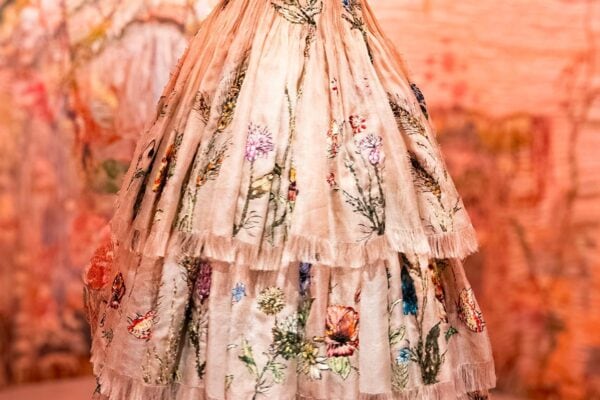
Rabanne possesses a rare DNA. The house has built its image around unexpected materials: metal, plastic, knitwear, discs, sequins, and plays on texture. This identity is an advantage; it avoids uniformity and gives the brand a unique place on the Parisian fashion calendar. However, it can also become a constraint. Futurism alone is not enough. A fashion house must also offer wearable pieces, create desirable accessories, and inspire customers to return to the store. The Fall/Winter 2026 collection, the last presented by Julien Dossena, illustrates this tension. The house blends layering, lace, knitwear, retro references, and metallic details. Rabanne's Fall/Winter 2026 Fashion Show It showcases a vision that retains the house's experimental spirit. The next chapter may need to reinforce this clarity. Sharper cuts. Statement pieces. Distinctive bags. Shoes that can seamlessly integrate into everyday life. Contemporary luxury values visual impact. It also values functionality. A spectacular dress creates an image. A well-designed accessory can build a lasting relationship with the customer.
Succession: more than a name, a creative model choice
Rumors surrounding a successor are part of the fashion spectacle. They attract attention. They create anticipation. They shouldn't obscure the essential question. What kind of creative model does Rabanne want? A star personality? A discreet figure from within the studio? An accessories specialist? A designer with a strong visual culture? Each choice reveals a strategy. A famous name can generate a media frenzy. A more discreet profile can solidify the fundamentals. A product-oriented designer can strengthen the business. A cultural figure can broaden the house's aura. Rabanne must also consider the speed of the transition. The collections must continue. The teams must stay the course. The buyers must understand the next direction. This situation connects with the Musical chairs of artistic direction which are currently shaking up the fashion world. Change sometimes becomes a tool for revitalization. It remains risky when it undermines coherence. At this stage, Rabanne has not announced the name of the future artistic director. This anticipation fuels curiosity. It also places the house before a responsibility: to choose a vision capable of lasting.
The musical chairs game: a market in search of narrative as much as results
Contemporary fashion lives to the rhythm of appointments. Departures create spikes in attention. Arrivals revitalize the runway shows. Houses use these moments to announce a new chapter. This movement responds to an economic logic. The market wants results. It also demands narratives. A house must remain visible without losing its soul. Clients want a stable signature. Social media demands novelty. The two expectations seem contradictory. Yet they structure today's luxury. Rabanne must therefore find its rhythm. Too much disruption can tire the public. Too much continuity can diminish desire. The right strategy creates visible evolution without erasing the fundamentals. The house possesses strong assets: a history, a shared vision, a distinctive fragrance presence, and a recognizable visual language. The next challenge is to transform these assets into lasting desire.
Calendar, studio, craftsmen: the invisible impact of a creative transition
A change in artistic direction doesn't just affect the runway. It impacts the studio. It alters the pace of the collections. It influences communication with the workshops. At Rabanne, certain skills demand particular precision: metalwork, knitwear, embroidery, glossy finishes, and the construction of volumes. The studio ensures an essential part of continuity. It protects the established codes. It oversees fittings. It prepares upcoming collections. It maintains dialogue with the various crafts. The merchandising teams also play a strategic role. They must translate a creative vision into a clear and accessible offering. They observe which pieces are successful and identify categories to develop. The retail teams must also keep pace. They receive the new collections, they must tell the story of the products, they must reassure customers, and they must preserve the quality of the experience. A successful transition is rarely spectacular behind the scenes. It relies on rigorous organization and requires consistency between creation, production, communication, and distribution.
What Rabanne stands to gain: strategic clarity and a new image breadth
Julien Dossena's departure creates uncertainty. It could also open up an opportunity. Rabanne can clarify its positioning. The house can choose which codes it wishes to reinforce. It can develop a new generation of accessories. It can deepen its relationship with metal. It can offer a more contemporary vision of tailoring. It can create new icons. The house can also broaden its narrative. Rabanne's futurism should not remain tied to space nostalgia. It can speak of light. Of movement. Of the body. Of celebration. Of freedom. Of technology. Of multifaceted femininity. In a context of post-crisis luxury strategiesThis precision becomes essential. Clients are looking for objects that have meaning. They want style. They expect a strong perceived value. Rabanne has the ability to meet this expectation. However, the house must avoid a pitfall. It must not reduce its DNA to a few metallic effects. Its strength lies in its ability to create emotion. The next artistic director will have to build a complete vision. Runway. Accessories. Image. Products. Client. Every element must speak the same language.
Rabanne after Julien Dossena: the future will be determined by consistency
Julien Dossena leaves a strong mark. He modernized Rabanne's legacy. He made the house more visible. He breathed new life into its futuristic codes. The future won't depend solely on the choice of a name. It will depend on Rabanne's ability to maintain overall coherence. The house must continue to inspire dreams. It must also create desirable pieces. It must make people want to wear Rabanne every day. It must strengthen the connection between fashion, accessories, and fragrance. Luxury isn't built solely on a spectacular silhouette. It's built on a vision that endures. A vision that inspires. A vision that resonates. A vision that makes people want to return.
Rabanne after Julien Dossena It is entering a sensitive phase. The house has all the ingredients for success: a powerful heritage, an international reputation, and a culture of audacity. The next chapter must transform this wealth into new creative force.
Sources
The Luxury Journal, "Julien Dossena at Rabanne is finished"
Élise Moreau is the editor-in-chief of Luxe Daily, specializing in haute couture fashion and fine jewelry. With over ten years of experience in the media…