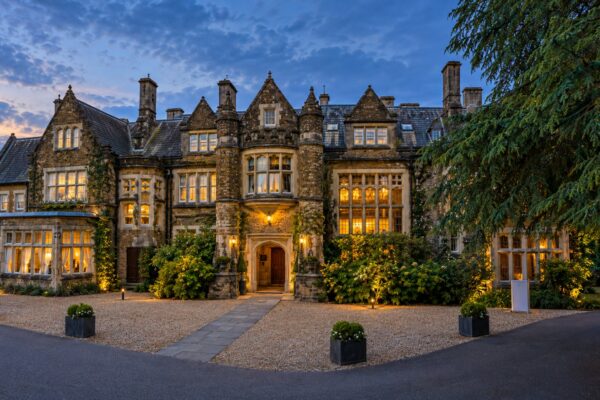
In a champagne market where the temptation of volume remains strong, Perrier-Jouët has been undergoing a strategic shift for several years that resembles less a growth plan than a discipline: choosing to "grow" rather than "increase in size." In a discussion conducted for a publication dated February 4, 2026, Guillaume Petavy, Global Chief Brand Officer, and Nicolas Chemla, Author and Creative Brand Strategist, highlight a conviction that has become central to the luxury sector: value is built as much by what we refuse to do as by what we decide to amplify.
Why is volume growth no longer the Holy Grail of champagne?

Champagne lives in a paradox. A celebratory product, it has long benefited from the expansion of consumption occasions and ever-widening distribution. But as markets globalize, volume becomes a noisy variable: it can flatter a performance, weaken consistency, and trivialize a Champagne house. In premium categories, sustainable performance is defined more by the mix (the quality of sales), margin, desirability, and channel control than by the sheer number of cases sold.
For a house like Perrier-Jouët, rooted in Épernay and associated with a renowned floral signature, the challenge is not simply to sell more, but to sell better, in the right place, at the right price, with the right story. This balancing act points to a fundamental question: is champagne an entry-level luxury or a complete grammar of luxury, with its codes of rarity, hospitality, craftsmanship, and culture? "Growing" implies choosing the latter.
Growing taller vs. getting fatter: defining desirability as a KPI
Desirability is a word often used, rarely defined. In the luxury sector, it refers to a brand's ability to be chosen before being compared, to be anticipated before being promoted. It is measured by the strength of brand equity, preference, consideration, the ability to maintain a price point, but also by the quality of touchpoints: physical locations, service rituals, collaborations, content, and design. Desirability is therefore not just an image; it is a complete strategy.
Choosing to grow rather than get bigger means managing the company with instruments other than volume: shifting the mix towards higher value vintages, improving selective distribution, increasing margins, raising the share of on-trade in prescribing locations, and ensuring international consistency in positioning.
This logic is familiar to luxury houses (from haute couture to jewelry) and increasingly to premium spirits, where moving upmarket is often preferred to mass production.
Repositioning: from Art Nouveau heritage to a brand platform
Perrier-Jouët possesses a rare cultural asset: a historical connection to ArtNouveau, whose organic aesthetic naturally embraces the idea of floral beauty. The House has notably linked its world toÉmile Gallé, an iconic motif that embodies a delicate, vibrant, and instantly distinctive aesthetic. In a world saturated with discourse on authenticity, this heritage becomes valuable when activated as a contemporary platform, not as a museum: a visual language, a sensibility, a way of inhabiting time.
Repositioning isn't about slapping on a new story, but about connecting heritage to today's expectations: a quest for beauty, emotion, and experiences, but also a desire for meaning and coherence. Floral qualities, for example, aren't simply a matter of taste; they can guide design, hospitality, cultural partnerships, and even how we talk about terroirs and blends. When DNAbecomes a compass, growth ceases to be a mere accumulation of initiatives and becomes a trajectory.
The role of the Brand Office: creative consistency and long-term decisions
In modern organizations, a brand can no longer be a mere layer of communication added at the end of the process. It becomes a governance system: making choices about what deserves to be produced, shown, distributed, and told. The Brand Office, as envisioned in relation to the role of Global Chief Brand Officer, embodies this cross-functional responsibility. Its role is to align teams around a shared intent and to safeguard consistency, particularly when commercial pressures lead to numerous exceptions.
Creative consistency isn't an aesthetic obsession; it's an economic lever. A consistent brand spends less to be understood, creates more value with every interaction, and is more resilient to market cycles. For Perrier-Jouët, this means orchestrating continuity between visual identity, box design, contents, service rituals, hospitality experiences, and cultural messaging. Nicolas Chemla, as creative strategist, implicitly reminds us of a simple rule: in luxury, the detail is never just a detail; it's the product.
Price and budget: let the mix speak for itself, not the boxes
Pricing in the champagne worldis a language. It speaks to confidence in the value, the brand's position in the hierarchy, the quality of its distribution, and its capacity to invest for the long term. "Growing" means maintaining a price and justifying it with a comprehensive experience, not just a technical argument. A price increase without a corresponding improvement in all the key indicators (service, design, narrative, selectivity) undermines credibility; conversely, a price supported by impeccable execution becomes a signal of desirability.
The portfolio is equally strategic. A Champagne House must choose which cuvées to showcase as flagships, how to balance a range of discovery offerings with rarer expressions, and how to avoid spreading itself too thin. In the world of Champagne, the balance between blends, vintages, prestige cuvées, and special editions can quickly become a promotional maze. The "grow without getting bigger" approach encourages clarity: fewer opportunistic actions, greater transparency, and a focus on the benchmarks that build perceived value over time.
Selective distribution: on-trade, allocation and geography of priorities
Distribution is the true medium of luxury . In the champagne industry , the balance between mass distribution and selectivity shapes perception. Perrier-Jouët, by prioritizing desirability, reinforces the importance of the on-trade, meaning restaurants , luxury hotels, champagne bars , and celebratory venues where service and ritual imbue the product with a deeper meaning. A bottle served in the right glass, at the right strength, at the right time, tells a story far more powerful than a hundred advertisements.
This selectivity also implies a policy of allocation and market priorities. Not all countries, cities, or partners are equal in terms of cultural influence and the ability to cultivate a particular image. Luxury brands embrace choosing their stages: capital cities, destinations, influential addresses, and events where the brand expresses itself with precision. This isn't a retreat, it's a strategic framing. On an international scale, it's better to be intensely desirable in key locations than to have a widespread presence where one becomes interchangeable.
Experiences and hospitality: when the brand becomes a place
Champagne is a product of the moment, and moments are carefully orchestrated. Hospitality thus becomes a key differentiator: welcoming guests, offering tastings, sharing stories, and showcasing the expertise. The Houses that capture the public imagination no longer simply sell a vintage; they sell an art of hospitality. In Épernay, as in major cities, the experience must reflect the same principles: sensory appeal, precision, refinement, and exceptional service.
In this context, design plays a key role, not as decoration but as an interface between the brand and the lived experience. TheArt Nouveau aesthetic, with its organic lines, can inspire the scenography, materials, textures, lighting, and even the way a visitor's journey is conceived. Contemporary luxury values the time spent with the brand: a guided tasting, an exceptional dining experience, an encounter with the craftspeople. The more authentic the experience, the less need there is to emphasize the message.
Cultural Partnerships: Creating Value Through Art and Life
Cultural partnerships are often reduced to mere image-building exercises. Driven by a desire to create desirability, they become a shared language, a way to express what the House stands for. Art Nouveau is not simply a heritage; it is a gateway to dialogue with contemporary creation, design, decorative arts, crafts, and even landscape architecture. For Perrier-Jouët, floral themes can become a cultural subject, not just a marketing promise.
The value of these collaborations hinges on one criterion: consistency. A luxury Champagne house doesn't need to be everywhere; it needs to be present where the encounter enriches the perception of the brand. The projects that linger in the memory are not those that "make a splash," but those that deepen a sense of uniqueness. In an environment where attention is scarce, cultural capital acts as a multiplier: it reinforces the perception of legitimacy, and therefore the ability to maintain more selective distribution and a fairer price.
Sustainability and viticulture: credible scarcity, responsible luxury
Scarcity in the luxury sector is only acceptable if it is credible. In Champagne, it reflects agricultural realities: vine cycles, yield management, climatic constraints, and viticultural choices. To speak of desirability without mentioning sustainability is like building a promise on sand. The premium consumer, whether connoisseur or aesthete, now expects a form of responsibility: attention paid to terroir, biodiversity, environmental impact, and practices that protect future quality.
This requirement is not simply a label; it is part of a vision. Responsible luxury is not luxury that renounces excellence, but luxury that makes it sustainable. For a House like Perrier-Jouët, the challenge is to connect the narrative of life (flowers, nature, delicacy) with tangible evidence: production decisions, resource management, and long-term commitment. Ultimately, sustainability fosters desirability because it builds trust.
New models of brand building: lessons beyond champagne
The choice to "grow rather than get bigger" is part of a broader evolution in brand building within the luxury and premium spirits sectors. The most successful brands no longer see marketing and product as opposing forces; they orchestrate a value chain where each link reinforces the others. They invest less in repetition and more in precision: fewer messages, but messages that resonate; less distribution, but locations that matter; less activation, but experiences that leave a lasting impression.
This model requires a new discipline in the use of indicators. While the numbers remain important, the focus is also on understanding what precedes the sale: spontaneous desire, preference, the quality of the target audiences, the share of sales to influencers, the evolution of the marketing mix, and the ability to recruit without damaging the brand image. The brand itself becomes a financial asset. Through this shift, Perrier-Jouët illustrates a simple yet demanding idea: the strongest growth is that which reinforces identity rather than diluting it.
In the words used to describe the approach outlined by Guillaume Petavy and Nicolas Chemla, one can also hear a response to a contemporary concern: the fear that luxury will become commonplace by striving for scale at all costs. However, luxury is not meant to be large in volume; it must be large in meaning, in the quality of its execution, in the desire it inspires. For champagne, a category intrinsically linked to celebration, the opportunity is immense: to once again become a cultural signature, and not simply a consumer reflex.