Jacquemus: a dazzling collection at the Picasso Museum
The Luxe Daily Editorial Team, January 15, 2026, 9 min, Fashion
At the end of January, Paris has that cool light that makes the stones appear sharper and the silhouettes more graphic. The city lives to the rhythm of fashion shows, invitations passed around in hushed tones, and appointments noted like closely guarded secrets. This time, it's Jacquemus who's generating the anticipation: Simon Porte Jacquemus's fashion house will present its next collection at the Picasso Museum. This choice of venue isn't simply a prestigious address, but a statement. A way of saying that fashion, too, can engage in a dialogue with heritage, with art, with the gaze.
This show's arrival on the calendar is no accident: timed to coincide with peak attention, it promises a unique evening, straddling the line between culture and Fashion Week. Jacquemus has often enjoyed venturing off the beaten path. But here, the gesture takes on an added dimension: entering a museum means accepting a different sense of time. Clothing, by its very nature ephemeral, encounters a place that preserves, that tells a story, that commands respect. And it is precisely there that the magic can happen.
A museum, an aura: why is the Picasso Museum a choice that matters?
The Musée national Picasso-Paris is not simply a beautiful room. It is a place steeped in history, housed in theHôtel Salé, in the heart of the Marais district. One walks through spaces that still bear the marks of a long history, and experiences that very Parisian feeling of walking seamlessly between past and present. Displaying a collection in a museum means choosing a stage that does more than simply host; it influences. The architecture dictates a certain style, the perspectives compel one to consider the silhouette, and the light calls for specific fabrics, colors, and rhythms.
And then there's the name: Picasso. A word that resonates immediately, even for those who haven't studied art history. It evokes freedom, audacity, the ability to push boundaries. It's not about putting fashion in a museum for aesthetic purposes: it's about grounding the show in a shared imagination, in a demanding vision. This compels us to go beyond the Instagram effect. To offer a vision that holds up even when the sound is muted, even when only an image remains.
Jacquemus: the success of a personal story that became a global phenomenon
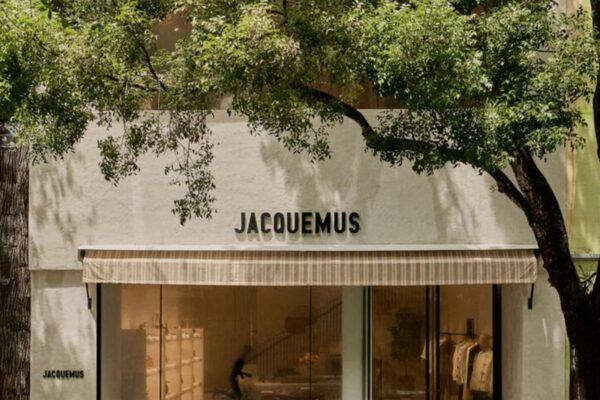
What's striking about Jacquemusis the coherence of his world. There's a subtle Provence influence, a sun-drenched sensuality, a simplicity that's never simplistic, and a penchant for emotion conveyed without grand pronouncements. The designer has built a brand like one builds an atmosphere: it's instantly recognizable, not because it's loud and clear, but because it has a distinct identity. Jacquemus knows how to translate an idea into a silhouette: a dress that floats like a summer memory, a structured yet never rigid jacket, an accessory that becomes a signature without losing its playful touch.
And above all, Jacquemus understood something essential: today, fashion is as much about what you see as what you wear. It lives on a catwalk, then in a video, then on a phone screen. The challenge is to remain desirable without becoming repetitive. This is where the choice of the Picasso Museum becomes interesting: it brings a new tension, a setting that can renew the narrative without betraying thebrand's DNA.
A symbolic return: Jacquemus has already "inhabited" the Picasso Museum
This isn't the first time Jacquemus has showcased his work in this museum. The house previously presented the La Bomba collection (spring/summer 2018) here, a moment that remains a landmark in the brand's history. Returning to the same location years later is no coincidence: it's a way of paying homage to his own journey. As if the designer were returning to the place where a significant milestone was reached, but with a new maturity, a new scope, a new place in the fashion world.
One can see a simple message there: " I haven't forgotten where I come from." But also a more subtle one: "I know what this place evokes in a show." The Picasso Museum is not neutral. It demands a certain precision, almost a restraint. And Jacquemus, precisely, likes it when emotion arises from a detail rather than an excess.
The calendar: a date that puts Jacquemus in the center of attention
The show is scheduled for January 25th, closing Paris Men's Fashion Weekand on the eve of Haute Couture Week. This timing is strategic: it's the moment when Paris is saturated with attention, when newsrooms are still buzzing, and when images circulate rapidly. It's also a way to occupy a specific space: that of having the last word before haute couture takes over the conversation.
In this context, Jacquemus doesn't need to overdo it. Simply choosing the Picasso Museumon this date is enough to create an event. The rest will depend on the execution: the soundtrack, the casting, the pacing, the way the audience is drawn into the story. And that's where we can expect a staging conceived like a film, with particular attention to angles, entrances, and the flow of the viewer's gaze.
Art and fashion: an encounter that can be subtle… or a caricature
When a fashion house claims artistic inspiration, the risk is well-known: falling into facile illustration, into an overly literal wink. But Jacquemus is more accustomed to working through feeling, through atmosphere. If Picasso infuses the collection, it's likely to be in an indirect way: a bolder palette, more assertive contrasts, a play between curves and angles, a silhouette that seems to be cut out and then reconstructed. The idea isn't to create a Picasso collection, but to let the space act as a catalyst.
And perhaps this is the most interesting challenge: creating a dialogue between two types of creation. Art, which is contemplated over time. And fashion, which must make an immediate impact, seduce, and convince at a glance. A museum compels us to slow down, to observe. If Jacquemus manages to create this sense of pause, even in a fifteen-minute show, then the event can transcend mere hype.
What we can expect from the collection (without resorting to crystal ball gazing)
The precise details will, as always, remain closely guarded until the very last moment. But Jacquemus's approach is clear: to offer pieces that tell a story, without sacrificing the effortless feel of wearing them. We can imagine very clean silhouettes, controlled volumes, and materials that react beautifully to the museum's interior lighting. And likely, striking accessories as well: Jacquemus knows how to transform a bag into an indispensable supporting character, a detail that defines an entire look.
The question, ultimately, is simple: will Jacquemus choose the path of purity, almost museum-like, with even more minimalist lines? Or, on the contrary, a form of visual joy, a contrast between the solemnity of the setting and the energy of the garment? Both scenarios are possible, and that's what makes the anticipation so exciting. Jacquemus is capable of being both tender and radical in the same look.
Jacquemus-style communication: creating desire even before the first look
Jacquemus built part of his success on a very modern strategy: telling a story beforehand, teasing without giving too much away, building tension like a movie trailer. Social media then becomes an extension of the show: the venue, the location scouting, a detail of the set design, a glimpse of an invitation, an image that hints without revealing. It's not just marketing: it's a way to draw the public into the story, even if they'll never be in the front row.
In a museum, this strategy can be deployed in an even more cinematic way. The corridors, the staircases, the moldings, the interplay of light and shadow: everything can become material for a story. And this is where Jacquemus excels: giving the impression that one is experiencing something, even from a distance. The show becomes a collective moment, not just an event reserved for invited guests.
What this fashion show says about fashion today
Presenting a collection in a world-renowned museum confirms a fundamental trend: fashion is seeking venues that tell a story as much as the clothes themselves. Traditional runways still exist, of course. But the audience has changed. They no longer simply want to see looks; they want to understand a world, feel an atmosphere, and be part of an experience. The venue has become a language, almost a complete sentence.
And then there's a more concrete reality: fashion is a cultural industry. It engages in a dialogue with art, photography, film, and architecture. When this dialogue is genuine, it enriches both worlds. When it's opportunistic, it rings hollow. Jacquemus, by returning to the Picasso Museum, is playing a demanding card: he's exposing himself to an environment that doesn't forgive superficiality. But if he succeeds, he'll create a powerful moment: one that's remembered beyond fleeting trends.
An event that promises an evening "between Marais and myth"
Ultimately, this show has all the hallmarks of a landmark event: an iconic venue, a key date, a fashion house that knows how to create desire, and a story of return, almost a narrative. Jacquemus isn't coming to the Picasso Museum just for show. He's coming to find intensity, a tension between the ephemeral and the permanent. And that's precisely what we expect from a great show : that it transcends the collection itself to become a collective memory.
On January 25th, Paris will still be in winter. But there are evenings that make you forget the cold. Those where fashion, for a few minutes, becomes a form of living art.
The Luxe Daily editorial team signs the articles produced collectively by the magazine's team: news, results summaries, features and guides dedicated to fashion, jewelry, watchmaking, etc