
Porsche: a brand born from engineering before becoming a luxury icon
Porsche is experiencing less of an identity crisis than a strategic recalibration of unprecedented scale in its recent history. After significantly expanding its product range, accelerating electrification, and multiplying variants, the Stuttgart-based manufacturer is now changing its approach: greater discipline, less complexity, and a clear priority on desirability rather than volume. The figures explain this shift. Porsche delivered 279,449 cars in 2025, 10% fewer than in 2024. In the first half of 2026, deliveries declined further to 122,306 units, down 16.5%. Yet, revenue is holding up better than volume, and operating profitability rebounded to 7.8% in the first six months of 2026.
Above all, the icon endures. After a record 51,583 Porsche 911s delivered in 2025, sales of the sports car are projected to increase by another 19% in the first half of 2026.This is the real question for the luxury sector: does Porsche need to sell ever more cars to remain strong?
Its new CEO, Michael Leiters, now clearly answers in the negative. To understand the current tension, we must go back to what Porsche is actually protecting.
1931 marks the founding of Ferdinand Porsche's design office in Stuttgart. Porsche's official birth as a sports car brand occurred on June 8, 1948, when the 356 "No. 1" Roadster received its road approval. Then came the break.
On September 12, 1963 , Porsche presented the 901, the future 911 , at the Frankfurt Motor Show . Its production began the following year and its architecture gradually became the emotional center of the brand.
The strength of the 911 lies precisely in a rare quality in the luxury sector: evolving without rendering the previous generation culturally obsolete. The proportions change. The technology advances. The performance skyrockets. But the product remains instantly recognizable. This continuity has built what a financial statement cannot directly measure: Porsche's symbolic capital.
The problem isn't really the volume
To present the current situation as the result of a simple "race for volume" would now be too simplistic. Porsche has indeed significantly expanded its market with the Cayenne, the Panamera, and then the Macan. The Macan remains the brand's best-selling model, with 84,328 units delivered in 2025.
But Porsche is asserting the exact opposite of a growth-at-all-costs strategy. Its principle has become "Value over Volume." On June 23, 2026, Michael Leiters explained this to shareholders: selling more cars does not automatically make Porsche stronger. For management, value arises when the consumer voluntarily chooses a Porsche because they desire, and therefore accepts the corresponding price.
This wording could almost have come from a luxury brand. The product must not only meet a need; it must generate a desire strong enough to override rationality.
"Value over Volume": Porsche rediscovers a fundamental rule of luxury
This new doctrine is probably the most important strategic point. In the luxury sector, increasing volumes is not necessarily problematic. The difficulty arises when growth slows
the perceived difference, the value, the relative scarcity or the strength of desire.
A house can become very important while remaining extremely desirable if its range of architecture maintains distinct levels of aspiration.
At Porsche, this hierarchy can be embodied by several territories:
- Macan and Cayenne for everyday sportiness ;
- Taycan for E-Performance ;
- Panamera for grand tourism;
- 911 for the historic heart;
- GT, Turbo and ultra-high-performance editions for the extreme;
- Exclusive Manufaktur and Sonderwunsch for individualization and rarity.
The priority is therefore less about reducing Porsche than about making this pyramid perfectly legible.
2025: The year the Porsche business model was severely shaken
The transformation, however, is not merely philosophical. It is a response to a particularly difficult financial year. In 2025, Porsche generated €36.27 billion in revenue, compared to €40.08 billion in 2024. Even more striking: the group's operating profit fell from €5.64 billion to €413 million , and the operating margin from 14.1% to 1.1%. This exceptional drop must be properly interpreted. It is not solely due to less desirable cars.
Porsche has recorded approximately €3.9 billion in extraordinary charges, primarily related to the reorientation of its product strategy, its battery business, and US tariffs. The automaker is therefore accepting a portion of these costs to adjust its course. The crisis is simultaneously commercial, industrial, and strategic.
China: one of Porsche's real weaknesses
The Chinese market perfectly illustrates the difficulty. Porsche delivered 41,938 vehicles there in 2025, a decrease of 26% in one year. The brand cites two main causes:
- the weakness of the Chinese luxury ;
- competition is extremely intense, particularly in the electric vehicle sector.
This second point deserves particular attention. For a long time, a premium European manufacturer could consider technology as one of its decisive advantages.
In China, Porsche now faces electric vehicle manufacturers capable of rapid innovation in batteries, interfaces, software, digital comfort and connected equipment.
The battle for automotive prestige is therefore also becoming a technological battle. The performance of a chassis is no longer always enough to justify the price difference.
Porsche is not giving up on electric vehicles: it is abandoning the rigid timetable
This is probably the most misunderstood aspect of the current strategy. Porsche is not turning back on electric vehicles.
She is slowing down and making her schedule more flexible.
On September 19, 2025, the manufacturer announced that several electric vehicle programs would be delayed. The future large electric platform planned for the 2030s, in particular, will need to be redesigned. At the same time, Porsche has decided to continue producing internal combustion engine and plug-in hybrid models for longer.
The reason given is simple: global demand for premium electric vehicles is growing more slowly than anticipated. Porsche therefore wants to be able to offer, simultaneously, internal combustion engine, plug-in hybrid, and fully electric vehicles. This choice has become one of the cornerstones of its strategy.
By 2025, more than one in five Porsches will already be fully electric
Talking about the decline of electric vehicles shouldn't make us forget the figures. In 2025, fully electric cars represent 22.2% of Porsche deliveries, compared to 12.7% in 2024.
Including plug-in hybrids, 34.4% of Porsches delivered worldwide were electrified. In Europe, this figure reached 57.9%. The transformation is therefore very real.
However, in the first half of 2026, the share of 100% electric vehicles falls back to 19.4%, particularly in a context of product availability and changes in subsidies in different markets.
To further explore this transformation, Luxe Daily also analyzes how the electric luxury car is gradually replacing mechanical noise with immediate power, software, silence, and personalization.
The electric Macan has already become a volume product
The Macan represents one of the most important tests. Of the 84,328 Macans delivered in 2025, 45,367 were fully electric. The majority of Macans sold worldwide that year were therefore already BEVs.
In France, the performance is even more striking: Porsche indicates that the Macan will represent more than half of its national sales in 2025, with 2,099 registrations, a 61% increase. This result provides an interesting answer to the question of electric vehicle desirability. The Porsche consumer is not necessarily averse to electric vehicles.
He simply demands that electrification not erase the qualities that justify the brand.
Cayenne Electric: Turning an SUV into an electric legacy
The second laboratory is the Cayenne Electric. Presented in November 2025, it complements the thermal and plug-in hybrid versions, which Porsche plans to continue developing over the next decade.
The first deliveries of the Cayenne Electric began at the end of June 2026. Michael Leiters uses a revealing expression about it: building a true "BEV legacy".
That's precisely the challenge. A heritage brand cannot consider electric vehicles as a technological interlude.
She must create for him: a story, references, desired models and gradually memories.
The 911 has over six decades of iconic status. The electric Porsche has yet to create its own.
The 911 will not be fully electric
In June 2026, Porsche put an end to one of the major speculations surrounding its iconic model. Michael Leiters confirmed that there would be no fully electric 911 in the current strategy.
On the other hand, hybridization is becoming a structural element of its future.
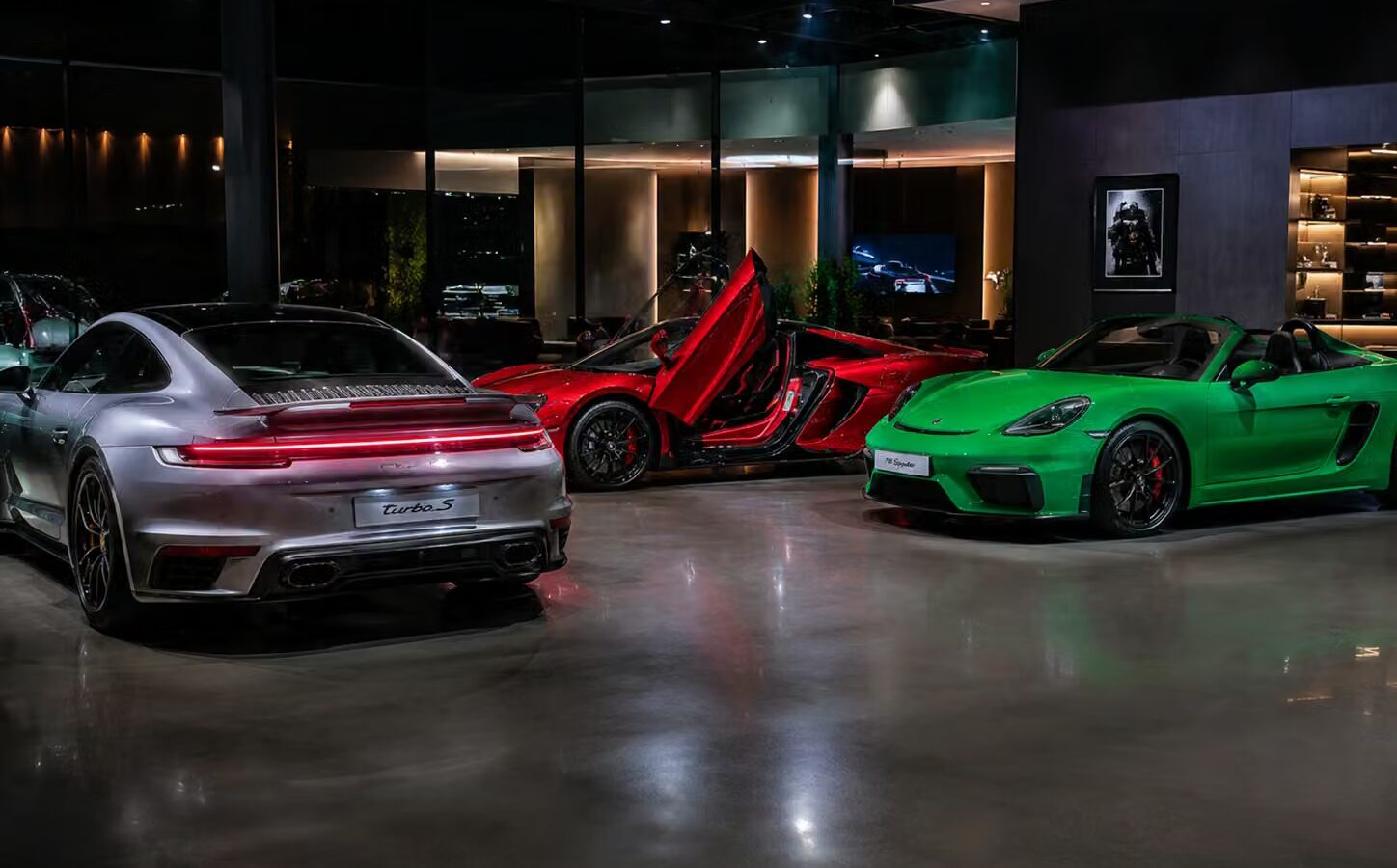
The 911 Turbo S and its T-Hybrid exemplify this approach: using electricity as a performance enhancer rather than a complete replacement for the internal combustion engine. In this way, Porsche protects its most emotionally resonant object while gradually opening it up to new technologies.
The 911 is becoming a kind of evolving sanctuary. It's changing.
But Porsche itself sets a boundary that must not be crossed.
The 911's durability is the best indicator of the brand's health
The results lend weight to this strategy. In 2025, the Porsche 911 broke its record with 51,583 deliveries, up 1%.
In the first half of 2026, while overall Porsche deliveries fell by 16%, those of the 911 increased by 19%. This contrast is fascinating.
The product most closely linked to Porsche's heritage is also the one that has best withstood a difficult market. A simple message can be read into it:
The more Porsche resembles Porsche, the more robust its desirability seems.
It is obviously important to avoid making an automatic causal connection. A 911 and an SUV do not serve the same purposes or follow the same production cycles.
But symbolically, the signal is particularly strong.
The real risk, therefore, is not the SUV, but the confusion
The Cayenne is sometimes presented as the moment when Porsche ceased to be a pure sports car brand.
Yet, more than twenty years after its launch, the 911 has not disappeared.
It has not become secondary either.
Expanding the range can therefore work when one principle remains intact: each Porsche must retain an identifiable dynamic legitimacy.
The risk arises when too many variants become difficult to distinguish.
Porsche now acknowledges this itself.
In June 2026, Michael Leiters states that the portfolio has become too complex, including compared to the competition, and announces a reduction in the number of variants.
This is a crucial change.
Exclusivity is not just about producing less.
It also involves making more choices.
A paradox: fewer variants, but perhaps more very high-end models
The 2035 Strategy nevertheless presents an interesting tension. Porsche wants to reduce complexity, but at the same time plans to expand its portfolio into higher margin segments, particularly above its current two-door sports cars and above the Cayenne.
This is not necessarily contradictory. A range can include fewer variations while being more expensive and exclusive.
For a luxury brand, this strategy can be particularly effective. Instead of targeting every niche by multiplying similar versions, Porsche can build a few more strongly differentiated offerings.
The challenge will then be to verify that these future models possess Porsche legitimacy , and not just profit margin potential.
Sonderwunsch: when exclusivity becomes individual
This is probably one of the most promising territories to reaffirm Porsche luxury.
Sonderwunsch, literally "special request," allows you to go far beyond the classic configurator. And, in some projects, to create truly unique models in collaboration with the client.
Porsche points out that this culture dates back to the 1950s and now states that it wants to further develop its personalization capabilities.
In May 2026, the brand was still highlighting at Lake Como the growing role of Porsche Exclusive Manufaktur and Sonderwunsch in its offering.
The mechanism is perfectly suited to contemporary luxury. Rarity is no longer necessarily defined by a limited run of 50 cars. It can be created at the level of each individual vehicle.
The more a model is produced, the more important customization becomes
This is where the paradox of industrial luxury becomes interesting. Porsche is not Ferrari in terms of volume. Even less so Pagani. The brand produces several hundred thousand vehicles in some years. To maintain an impression of individuality, personalization therefore becomes strategic.
The brand already indicated that it offered more than 1,000 Exclusive Manufaktur options and specified that the average revenue per car linked to these options had doubled in five years. This is a powerful economic signal.
The customer no longer simply wants to buy a Porsche. They want to buy their Porsche. Luxury is shifting from ownership to specification.
Customer experience is becoming an official pillar of the strategy
What was once considered peripheral marketing now belongs to the strategic plan. In its 2025 annual report, Porsche places the Brand & Customer at the heart of its Strategy 2035.
The objective is to sustainably secure the value and exclusivity of the brand, while creating a consistent experience throughout the purchase and ownership phase.
The strategy specifically mentions:
- brand positioning;
- the new customer groups;
- the360° customer experience ;
- exclusive events;
- community formats;
- the personalization of interactions.
The initial idea was therefore relevant, but it can now be supported by a strategy actually published by Porsche. The owner community is no longer a bonus. It has become an asset.
Owning a Porsche should produce more than just transportation
This is a principle that major luxury brands have mastered for a long time. In the automotive world, this can materialize through: racetracks, clubs, travel, heritage events, personalized delivery, restoration, factory customization, or meetings with specialists.
The more technologically complex the car itself becomes and the more comparable it is to other premium offerings, the more this ownership relationship allows for a differentiation of the experience.
The price of a Porsche then no longer only compensates for the object itself. It provides access to cultural and relational capital.
This is also the logic behind some of the brand's lifestyle extensions. Luxe Daily studied it with the Porsche x Bonpoint, where the 911 becomes a cultural language that can be transmitted beyond the automotive world.
Lifestyle: Enriching the brand without turning Porsche into a logo
This territory, however, requires discipline. A powerful icon can be placed on almost any object.
That's precisely why it's important to know when to say no. The Porsche x Bonpoint collaboration works because it's based on the 911, its heritage, design, and transmission. It remains connected to a central element of the brand's legacy.
Conversely, an uncontrolled proliferation of licenses could produce the opposite effect: making the brand extremely visible but less valuable. In the luxury sector, cultural presence is only valuable when it remains selective.
Porsche must also preserve its digital lead
luxury in 2026 is no longer solely about what's under the hood. Connectivity, infotainment systems, charging, updates, applications, cybersecurity, and personal data are now integral parts of the ownership experience.
Porsche has also restructured its digital governance: the Car-IT was dissolved on July 1, 2026 and its functions integrated into Research & Development as part of the organizational refocusing.
This move does not mean that software is becoming secondary. Rather, it shows that it needs to be more integrated into the development of the car.
Digital trust is also an element of the premium product, something Luxe Daily was already analyzing through Porsche's Bug Bounty program.
A connected luxury car can hardly be considered truly premium if its digital environment appears less sophisticated than that of a smartphone.
Sustainability can no longer be reduced to the launch of an electric model
Another necessary development: electric is not automatically synonymous with a complete sustainable strategy.
A credible analysis must look more broadly:
- battery production;
- energy used;
- materials;
- lifetime ;
- repairability;
- supply chains;
- recycling ;
- industrial emissions.
Porsche itself acknowledges that the pace of electrification depends on demand, different regions of the world, and the regulatory framework. The company now plans to increase its share of electrified models more slowly than initially anticipated. This transparency is better than an artificially linear narrative. The automotive transition is not a straight line.
However, the European regulatory context continues to push Porsche towards electrification
Product flexibility does not mean that regulatory pressure disappears.
The French Ministry for Ecological Transition points out that the European framework requires a progressive reduction in average CO₂ emissions from new passenger cars: -15% in 2025, -55% in 2030 and -100% in 2035 compared to the regulatory references provided for.
The regulation adopted in 2025, however, introduces more flexibility for the 2025-2027 intermediate target, and a review clause is provided for in 2026.
For Porsche, the conclusion is clear. The internal combustion engine can be extended. Hybridization can play a larger role. But the ability to manufacture truly desirable electric cars remains strategic.
Porsche needs to invent electric emotion rather than copy thermal emotion
This is probably the most interesting product development project. Trying to artificially reproduce a combustion engine in an electric vehicle quickly leads to a gimmick. The Porsche character should instead be found elsewhere: steering, braking, driving position, throttle response, chassis precision, thermal management, weight, endurance, and performance reproducibility.
Electric vehicles must create their own sensations. The Taycan was the first demonstration of this.
The electric Macan extends this principle to a more mainstream SUV. The Cayenne Electric now attempts to apply it to a larger vehicle. The question is therefore no longer: "Can an electric Porsche look like a combustion-engine Porsche?"
But :
What makes a Porsche recognizable when the engine is no longer the focus of the story?
The Taycan also highlights the limitations of the first electric cycle
The answer isn't perfect yet. Taycan deliveries fell to 16,339 units in 2025 , a decrease of 22%. Porsche attributes this decline in part to the slowdown in the development of electromobility.
This doesn't make the Taycan a failure. But the figure serves as a reminder that a premium electric car can't rely solely on technological innovation. Once the initial launch effect has worn off, it must cultivate a desirability that can last for generations.
This is precisely what Porsche is seeking to develop today with this idea ofelectric heritage.
Motor racing remains one of the best defenses against trivialization
Porsche finally possesses an advantage that would be dangerous to underutilize: motorsport .Competition provides something that marketing cannot artificially manufacture: proof. Technologies can be tested. Performance can be compared.
Engineers faced with extreme constraints. And history accumulates victories, cars and drivers that then nourish the cultural value of road models.
Motorsport thus allows heritage and innovation to be linked without falling into nostalgia. The brand doesn't just celebrate what it was; it demonstrates what it can still do .
This strategic refocusing extends beyond automobiles
The movement is broader than the product range.
The decision analyzed by Luxe Daily regarding Porsche's withdrawal from Bugatti Rimac also reflects this consideration of capital allocation, technological priorities, and the manufacturer's refocusing. Porsche has significant resources.
But the current context forces the brand to choose more rigorously where it wants to invest. In an industry that simultaneously demands several billion for thermal powertrains, hybrid systems, batteries, software, and new architectures, concentration becomes a competitive advantage.
First half of 2026: fewer cars, but profitability is recovering
The figures published on July 29, 2026 constitute the first real test of this new doctrine.
Between January and June:
- revenue: 17.23 billion euros, -5.1%;
- operating profit: 1.35 billion euros, +33.9%;
- operating margin: 7.8%, compared to 5.5%;
- deliveries: 122,306 vehicles, -16.5%;
- Automotive net cash flow: 1.02 billion euros.
This contrast is precisely what Value over Volume. Volumes are falling much more sharply than revenue, and profitability is improving. It's too early to declare complete success: Porsche still anticipates significant restructuring costs in the second half of 2026 and in 2027. But the signal is clear. The brand is seeking to rebuild its performance without immediately resuming the pursuit of volume growth.
The next test will take place on October 7, 2026
The strategy has not yet been fully revealed. Porsche plans to present its Sportwagenschmiede 35 , its Strategy 2035, in more detail at its Financial Markets Day on October 7, 2026. This event is expected to clarify long-term choices regarding future models, investments, cost structures, technology, and likely the economic positioning of the portfolio.
At this stage, several principles are already known: less complexity, more value, greater individualization, and three powertrain technologies.
And a renewed priority on what Porsche itself calls its sports car DNA.
Porsche luxury cannot be measured solely by its price
This is ultimately where the limitations of many analyses of the brand lie. An expensive Porsche is not automatically a luxury Porsche. The price is a consequence. Perceived value is built beforehand. It stems from the coherence between: design, engineering, history, performance, competition, quality, experience, and relative rarity. When these elements remain aligned, relatively high production volumes do not preclude desirability. When their coherence weakens, artificially reducing production is no more sufficient to create luxury.
Porsche hasn't lost its identity: it's trying to make it more legible
The article's initial title referred to an "erosion of the essence of luxury." Data available in August 2026 suggests a more nuanced conclusion. Porsche is undeniably facing serious difficulties. Its global sales are declining.
China remains complicated. Electrification is progressing more slowly than expected. The battery strategy has had to be revised. The product range is considered too complex by its own CEO. And profitability projections for 2025 have taken a dramatic hit. But signs of dilution don't tell the whole story .
The 911 is breaking records. High-end versions remain sought after. Personalization is progressing. The electric Macan is finding its audience. And Porsche has just made exclusivity and desirability official strategic priorities.
The question is no longer whether Porsche must choose between growth and luxury. It must, above all, choose which growth still deserves the Porsche name.
FAQ: Porsche, 2035 strategy and the future of the brand
Is Porsche in trouble in 2026?
Porsche is undergoing a major restructuring phase. Its deliveries decreased by 10% in 2025 and then by 16.5% in the first half of 2026. However, its profitability improved in the first six months of 2026, with an operating margin of 7.8%.
Why are Porsche sales declining?
Porsche cites several factors: weakness of the Chinese luxury market, intense competition in China, difficulties in availability of certain models, end of production of the internal combustion 718, slowdown in electric demand and geopolitical context.
What is Porsche's "Value over Volume" strategy?
It consists of prioritizing value, product mix, pricing, desirability, and profitability rather than maximizing the number of cars sold. Michael Leiters explicitly believes that selling more cars does not automatically make Porsche stronger.
Is Porsche abandoning electric cars?
No. Porsche continues to invest in all-electric models, but is also retaining internal combustion and hybrid powertrains for longer than initially planned. Some future electric vehicle programs have also been postponed.
What percentage of Porsches sold are electric?
By 2025, 22.2% of Porsches delivered worldwide were fully electric , and 34.4% were electrified, including plug-in hybrids. In the first half of 2026, the share of fully electric vehicles reached 19.4%.
Will the Porsche 911 become electric?
Porsche indicated in June 2026 that there were no plans for a fully electric 911.However, high-performance hybrid technology plays an important role in its future.
Which Porsche sells the most?
In 2025, the Macan was the best-selling model range with 84,328 units, ahead of the Cayenne. However, the 911 reached a new record with 51,583 deliveries.
Why does the Porsche 911 remain strategic?
The 911 represents the historical, aesthetic, and emotional heart of Porsche. Its deliveries reached a record high in 2025 and increased by a further 19% in the first half of 2026 despite the brand's overall decline.
What is Porsche Sonderwunsch?
Sonderwunsch is Porsche's most exclusive personalization program. It allows for highly sophisticated configurations and, in some cases, truly unique models developed with the brand's specialists.
When will Porsche detail its 2035 Strategy?
Porsche plans an in-depth presentation during its Financial Markets Day on October 7, 2026.
Official French sources
- Directorate General for Enterprises – “Portrait of the automotive sector at the time of its transition to electric vehicles”
Consult the Directorate General for Enterprises - Ministry for Ecological Transition – “Electric cars and clean mobility”.
Consult the Ministry for Ecological Transition website. - French Treasury Directorate General – February 20, 2026, “What direction for car sales, internal combustion and electric?” Consult the French Treasury Directorate General


