Intimate dinners, pop-up suites, artisan workshops, immersive beauty spaces, journeys conceived as narratives: in Asia, luxury is no longer simply admired or acquired. It is experienced, felt, shared, and remembered. In a region where consumers are among the most connected and demanding in the world, experience is becoming the new language of desirability.
From the statutory object to the lived emotion

In Asia, experiential luxury addresses a paradox. Consumers continue to appreciate historic brands, renowned names, and exceptional craftsmanship. Yet, they increasingly question the justification for the price, the uniqueness of a piece, and the consistency of the brand message.
This demand is particularly evident when the market slows down. In mainland China, luxury spending continued to decline in 2025, with an estimated contraction of between 3% and 5% at constant exchange rates. In this context, simply releasing new products or raising prices is no longer enough to maintain the fascination. Customers want to understand what they are buying, to feel what the brand represents, and to experience a kind of privileged relationship with it.
The desire for luxury remains strong. An Ipsos study published in October 2025 indicates that 34% of affluent Chinese consumers surveyed say they are more inclined to buy luxury goods than before, and that luxury contributes to self-esteem for 85% of them. The desire has therefore not disappeared: it has become more selective, more emotional, and more sensitive to the actual value of the experience offered.
In this new equation, a store is no longer just a point of sale. It becomes a stage. A launch is no longer simply a product presentation. It becomes a moment of culture, sociability, or sensory discovery. As for service, it is no longer limited to the perfection of a welcome: it must offer the rare feeling of having experienced something unique.
Asia, a laboratory for more immersive luxury
From Tokyo to Shanghai, from Seoul to Bangkok or Singapore, brands are testing formats that are gradually blurring the lines between retail, hospitality, art, gastronomy, beauty and entertainment.
In Japan, the experience can take the form of a silent encounter with the craftsmanship, the materials, or the architecture of a place. Attention to detail, time, and cultural transmission provides brands with a natural platform to discuss craftsmanship, heritage, and subtle emotion.
In South Korea, where image, beauty, music, and digital communities intersect with remarkable speed, the luxury experience is becoming more rhythmic, more visual, and often more social. A product launch can become a cultural event, photographed, shared, and commented on even before it's purchased.
In China, the experience often needs to operate on multiple levels: creating a sense of surprise in the physical space, extending the narrative onto social media platforms, and transforming attention into engagement. Consumers don't just want to visit a brand's universe; they want to participate in it, interpret it, and share it with their community.
Finally, Southeast Asia and India are playing an increasingly important role in luxury brands' strategies. Bain estimates that the Middle East, Latin America, Southeast Asia, India, and Africa together represent nearly €45 billion in the luxury market by 2025, a size comparable to that of mainland China. Experiences in these regions often accompany the rise of new premium destinations, blending shopping, gastronomy, travel, and hospitality.
When the shop becomes a place to live
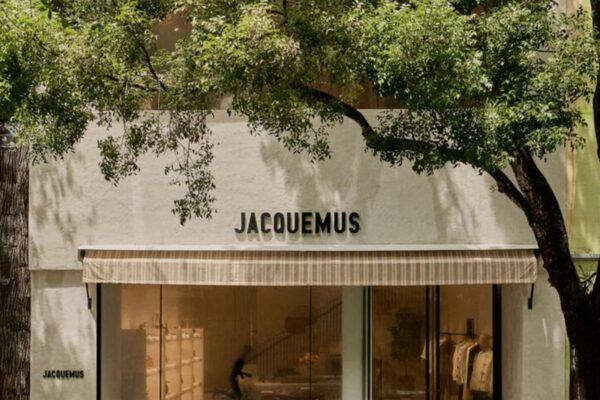
Contemporary Asian luxury is gradually moving away from the intimidating boutique, frozen in a form of solemnity. The most desirable spaces now resemble places where one would like to linger: intimate lounges, interior gardens, designer cafes, galleries, imaginary rooms, material libraries, or spaces dedicated to well-being.
This transformation isn't merely aesthetic. It changes our relationship with time. Buying a unique piece might take a few minutes; experiencing a brand can occupy an afternoon, an evening, sometimes even an entire stay. The more time spent with the home, the more intimate the relationship becomes.
In this context, hospitality emerges as a particularly strategic area. An exclusive afternoon tea, a gourmet restaurant, a spa, a pop-up suite, or a concierge service allow brands to become part of the customer's daily life in ways other than through clothing or accessories. They are no longer simply selling an image: they are offering a way to entertain, to travel, to pamper oneself, or to celebrate a special occasion.
This shift aligns with the aspirations of affluent young consumers. According to Kantar, those under 35 surveyed increasingly view luxury as an intense and all-encompassing experience: 43% plan to increase their spending on spas, 40% on hotels, and 37% on fine dining. Furthermore, 84% associate luxury with a remarkable in-store experience.
Digital technology does not replace experience: it amplifies it
In Asia, physical experience almost never exists in isolation. It often begins on a screen: a short video, a private invitation, a conversation on a social platform, a preview shared by an ambassador, or a booking via an app.
But digital technology hasn't eliminated the need for real-life experiences. On the contrary, the more images consumers see, the more they seek moments capable of evoking genuine emotion. The challenge for brands is therefore no longer to choose between physical stores and social media, between events and online commerce. It lies in crafting a seamless narrative across these different spaces.
A successful experience thus becomes natural content: not because it was conceived as an advertising backdrop, but because it inspires people to share it. Luxury then gains a more organic form of visibility, driven by customers who are not just sharing a product, but the memory of a moment.
This dynamic also explains why brands must remain cautious. A spectacular but superficial activation can produce the opposite of the intended effect. Asian audiences, highly attuned to visual and digital language, quickly identify artificial campaigns, inaccurate cultural references, or experiences designed solely to generate a photograph.
From location to cultural resonance
Luxury in Asia can no longer simply add a few local symbols to an international campaign. Consumers expect more: an understanding of the rhythms, sensibilities, gestures, places, and imaginaries specific to each market.
This expectation does not mean that brands must relinquish their identity. On the contrary, the most powerful experiences often arise from the encounter between an international heritage and a respected local culture. The expertise of a French brand can engage in dialogue with a Japanese ceremony, a Korean creative scene, an Indian textile tradition, or contemporary Chinese architecture, provided that this encounter is conceived with precision.
The challenge lies in avoiding two pitfalls: standardization, which replicates the same experience from one capital to another; and cultural opportunism, which transforms a local reference into mere decoration. The most compelling experiential luxury is not that which impresses the most, but that which creates a lasting resonance.
The new privilege: having experienced what others have not experienced
Luxury has always been based on a form of scarcity. Yesterday, this scarcity mainly concerned the object itself: limited edition, precious material, an unobtainable piece, a waiting list. Today, it also concerns the moment.
Gaining access to a confidential table, discovering a collection before its launch, attending a performance in an unexpected location, personalizing a creation with an artisan or staying in a universe imagined by a house constitute new forms of privilege.
What distinguishes the customer is no longer just what they own, but what they have experienced. A photograph of a bag can circulate endlessly; the memory of an experience remains personal. In a world saturated with images and instantly visible products, this rediscovered intimacy perhaps becomes the ultimate rarity.
A less ostentatious, but more memorable luxury
The shift from ownership to experience does not signal the end of the luxury object. On the contrary, it restores it to a more demanding role. The object must now prolong an emotion, embody a narrative, and evoke a moment of genuine connection with the home.
In Asia, this shift is particularly pronounced, driven by connected, cultured, mobile consumers who value unique experiences. The brands that succeed will not simply be those that multiply events or create spectacular settings. They will be those that craft desirable, culturally intelligent, and sufficiently rare experiences to leave a lasting impression.
Because tomorrow's luxury may no longer simply ask: "What do you own?"
He will ask a more intimate, more emotional, and more revealing question:
"What have you actually experienced?"
Sources
- Ipsos France, "Between desire and disappointment, experiential luxury takes precedence over the luxury of possession."
- Kantar France, "Luxury is becoming delinearized: new aspirations, new access, new imaginaries."
- Journal du Luxe, "Luxury in Asia: the new rules of brand experience".