Why is typography so important in luxury?

In the world of luxury, a letter is never entirely neutral. Even before it is read, it is looked at, felt, and sometimes recognized. The shape of a "G," the spacing between two capital letters, or the thinness of a serif can evoke a century of history, a Parisian address, a leather goods workshop, or a radically contemporary vision of fashion.
Luxury typography is therefore not simply a tool for conveying a message. It constitutes a true brand element , just like color, leather, metal, paper, or the architecture of a boutique.
The choice of a serif font, the contrast between thick and thin strokes, the use of capital letters, the design of a monogram, the rhythm of white space: each decision contributes to defining a brand's positioning. Typography can suggest heritage, establish rarity, express modernity, or make a product instantly identifiable among hundreds of others.
A luxury brand never sells just a bag, a watch, a perfume , or a dress. It offers a coherent universe composed of a story, symbols, artisanal gestures, and emotions.
Typography plays a part in this symbolic construction. It gives a visual voice to the brand and allows the same character to be found on a perfume box, a fashion show invitation, an advertising campaign or a digital interface.
In this context, the typeface fulfills several functions.
First, it must ensure brand recognition. Some logos are identifiable in fractions of a second, regardless of the product on which they appear.
It must then convey a positioning. A high-contrast typeface can suggest tailoring, editorial elegance, or sophistication. A geometric sans-serif can express mastery, sobriety, or a form of radical modernity.
Finally, it organizes the experience. Titles, prices, descriptions, buttons, labels and signage must form a coherent, legible and immediately understandable system.
This visual consistency complements the power of brand storytelling in luxury. Words tell a story; their design determines how that story will be perceived.
Logotype, monogram and brand typography: three concepts to distinguish

In everyday language, logo and typography are often confused. However, the two concepts are different.
The logo
The logotype, or typographic logo, is the brand name designed or composed according to specific rules. It can use an existing font, a modified version, or a completely custom-made alphabet.
The value of a logo is not based solely on the chosen typeface. It also depends on the spacing between letters, the proportions, the width of the characters, and certain almost imperceptible details.
The monogram
The luxury monogram combines one or more initials to form a standalone symbol. The double C of Chanel, the initials LV of Louis Vuitton, or the double G of Gucci can be used without the full name of the brand necessarily being present.
The monogram acts as a condensed signature. It must remain recognizable on very different media: bag clasp, belt buckle, watch face, button, packaging or digital icon.
The typographic system
The typographic system is more extensive. It encompasses all the fonts and rules used by the brand:
- logo typography;
- font reserved for major headlines;
- font intended for long texts;
- styles used for prices and product descriptions;
- international numbers, symbols and characters;
- rules for spacing, hierarchy and layout.
A company can therefore have a heritage logo while using a more functional digital typography on its e-commerce site.
The essential vocabulary of luxury typography
The quality of a typographic composition often lies in micro-details. These become particularly visible in the luxury sector, where precision directly contributes to perceived value.
| Typographical term | Definition | Effect on brand identity |
|---|---|---|
| Wheelbase | A small extension located at the end of a letter | It may evoke tradition, publishing, sewing, or authority |
| Contrast | Difference in thickness between the parts of a character | It brings sophistication, tension and elegance |
| Approach | General spacing applied to a sequence of letters | Gives the logo space or, conversely, density |
| Kerning | Adjusting the space between two specific letters | Visually balances pairs such as AV, VA or LT |
| Hunting | Width occupied by a character | Influences the presence, rhythm, and compactness of the text |
| Height of x | Height of lowercase letters without ascenders | It plays on readability and the perception of modernity |
| Line spacing | Vertical space separating two lines | Produces an impression of breathing room or editorial density |
| Ligature | Graphic fusion of several characters | Adds refinement or uniqueness to a composition |
| Small capitals | Capital letters drawn at the same height as lowercase letters | They create a discreet and sophisticated hierarchy |
| Elzevirian ciphers | Numbers where some symbols descend below the line | They reinforce an editorial, heritage or literary register |
In a world where every detail is scrutinized, poor kerning or overly tight line spacing can undermine the perception of quality. Conversely, a well-executed layout makes the message more confident, even when the reader is unable to consciously identify what produces this impression.
Serif, sans serif or custom typeface: what are the codes for a luxury brand?
Serif typography: heritage and sophistication
Serif fonts , or serif fonts, are regularly associated with tradition, printed culture, and heritage. They evoke books, engravings, archives, and the great signatures of the press or fashion.
High-contrast typefaces, which alternate between very thin and thicker strokes, create a dramatic effect. They work particularly well for headlines, campaigns, and packaging.
This relationship between serif and heritage is not automatic, however. A serif typeface can also be radical, contemporary, or experimental depending on its proportions and layout.
Sans-serif typography: clarity and control
Sans-serif fonts are often used to express minimalism, efficiency, and modernity. They withstand reduction well, work well on digital interfaces, and can give an impression of quiet control.
In the luxury sector, their effectiveness often relies on a very spacious composition. Capital letters gain presence through a generous approach and large areas of white space.
A sans-serif font does not necessarily mean a lack of heritage. Some companies have been using geometric logotypes for decades, which have themselves become part of their heritage.
Custom typography: creating a brand asset
A custom typeface allows a brand to have a typographic language that truly belongs to it. Certain characters can be redesigned, specific ligatures added, and proportions adapted to the brand's needs.
This customization offers several advantages:
- strengthen differentiation;
- harmonize print and digital;
- mastering all the fats and styles;
- develop the alphabets needed for international use;
- to prevent a widely used font from being associated with competing brands;
- transforming typography into a true intangible asset.
Customization is only relevant, however, if it addresses a strategic need. An original but illegible, incomplete, or difficult-to-deploy font can quickly become a constraint.
Chanel: the silent power of capital cities
The identity of Chanel, a luxury house, is based on an extremely limited visual vocabulary: black, white, capital letters, geometry and the intertwined double C.
The first Chanel Modes boutique opened in 1910at 21, rue Cambon. This date marks the official starting point of the House's history.
The Chanel logo is distinguished by its sans-serif capitals, balanced proportions, and remarkable economy of effect. It seeks neither ornamentation nor ostentation. Its strength lies in its stability, its rhythm, and its exceptional legibility.
The double C also functions as an independent symbol. On a clasp, a bottle, or a piece of jewelry, it is enough to activate the imagination of the House.
This understated approach illustrates a key principle of luxury branding: the more a symbol is controlled and established, the less it needs to say. Graphic silence then becomes a form of authority.
Louis Vuitton: when initials become a creative territory
Thetypographic history of Louis Vuitton cannot be reduced to a single logo. It is based on the coexistence of a name, a monogram, and a motif that has become a surface for creation.
In 1896, Georges Vuitton designed the Monogram to preserve theauthenticity of the House's trunks. The initials LV, with serifs, are combined with flowers and geometric patterns.
It is therefore necessary to distinguish between:
- the LV monogram, heritage and ornamental;
- the name Louis Vuitton, used as a typographic signature ;
- the Monogram canvas, which transforms the sign into a repeating pattern.
This visual architecture allows the House to work on multiple scales. The LV can appear as a discreet metallic detail or be deployed across the entire surface of a bag.
The motif also becomes a space for interpretation. Changes in colour, interventions by artists and variations in proportions allow it to evolve without losing its recognizability.
To further explore this logic, the history of Louis Vuitton, from the trunk to the monogram, shows how a functional signature became a global cultural language.
Gucci: the serif as a sign of theatricality
Founded in Florence in 1921, Gucci cultivates a more expressive identity, nourished by Italian craftsmanship, equestrian references, and a deliberate connection to popular culture. The House confirms this founding date in its official history.
The name Gucci is generally presented in serif capitals. The forms have a more editorial and theatrical presence than the geometric constructions of some French fashion houses.
In addition to this signature, there is the double G, featured on buckles, bags, jewelry, fabrics, and accessories. Depending on the creative period, the House may adopt a highly heritage-oriented, retro, maximalist, or deliberately minimalist visual language.
This flexibility is one of the strengths of the Gucci system. The code remains identifiable, but its interpretation can change depending on the collections and artistic directions.
Typography, therefore, does not necessarily freeze a house in place. When it is strong enough, it actually provides a framework within which to experiment.
Luxury typography is no longer limited to the logo
For a long time, typographic thinking focused on the logo and printed materials. Today, a company must design a true ecosystem.
On the packaging
Packaging is one of the main points of contact between the customer and the brand. The company name, the product, the contents, regulatory information, and usage instructions must all coexist without diminishing the perception of prestige .
Typography here acts as a sensitive material. Debossing, hot foil stamping, varnishing, or embossing can alter the way the letters capture light and react to touch.
In the beauty industry, this connection is particularly strategic. Luxury packaging becomes a showcase for the brand even before the perfume or skincare product is discovered.
In the shops
Signage should guide visitors without disrupting the atmosphere of the place. Names of spaces, labels, prices, and service information must remain legible while respecting the personality of the establishment.
An overly spectacular display can compete with the products. Conversely, overly discreet signage can complicate the customer journey.
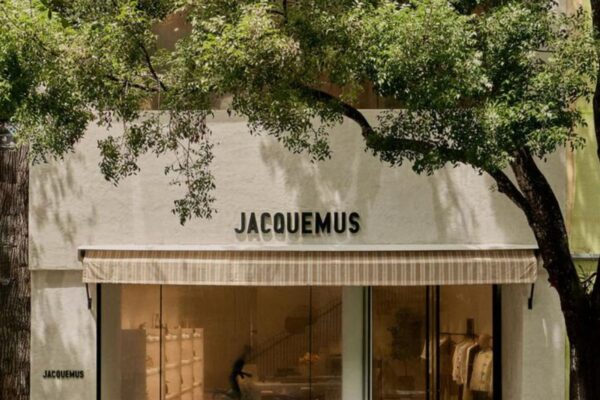
Typography thus contributes to the creation of a memorable luxury experience, from the facade to the receipt given after the purchase.
On websites and applications
On a digital interface, the beauty of a font is not enough. The following must also be taken into account:
- readability on mobile;
- the loading speed;
- the minimum text size;
- the contrast with the background;
- the clarity of the buttons;
- the hierarchy of titles;
- display of prices and currencies;
- compatibility with different browsers;
- accessibility.
A very thin, elegant font on a poster can become illegible on a compact screen. Printers must therefore distinguish between display fonts, reserved for large formats, and text fonts , designed for extended reading.
Major trends in luxury typography
1. Expressive restraint
The most effective identities are not necessarily the most decorative. Many homes favor clean lines, expansive rhythms, and generous white spaces.
This simplicity should not be confused with uniformity. When all brands adopt similar sans-serif capitals, the risk is losing the distinctive features that define their uniqueness.
Sophistication then relies on precise details: the width of the "M", the ending of the "R", the design of the "G", the height of the capitals or the spacing between the characters.
2. The return of expressive serifs
After several years dominated by minimalist logos, serif typefaces are experiencing a resurgence of interest.
The houses are looking for typefaces with more personality: dramatic contrasts, calligraphic curves, narrow capitals or references to archives.
This trend responds to a need for differentiation, but also to a desire for historical depth.
3. Proprietary Alphabets
Creating an exclusive typeface allows for global consistency. A single typeface family can include variants designed for campaigns, editorial texts, e-commerce, and signage.
The best proprietary fonts do not simply reproduce the logo. They translate its spirit into an alphabet that can be used on a daily basis.
4. Variable fonts
Variable fonts group several variations into a single file. They allow you to gradually adjust the weight, width, slant, or other parameters.
For an international brand, this technology makes it easier to adapt to different screens and formats. The same font can become more condensed on mobile or more expressive in a full-screen campaign.
The use of variable fonts must nevertheless remain regulated. Too many variations can weaken brand consistency if no clear rules are defined.
5. The dialogue between serif and sans-serif typefaces
Contemporary typographic systems often rely on a complementary duo.
An expressive serif can be reserved for campaigns and titles, while a sans serif ensures the readability of interfaces, descriptions and transactional elements.
This contrast creates a clear hierarchy without unnecessarily multiplying fonts.
Typography and internationalization: preserving DNA beyond the Latin alphabet
A global house must be able to speak French, English, Arabic, Chinese, Japanese, Korean or Cyrillic while maintaining a consistent identity.
This adaptation does not consist of artificially reproducing the forms of the Latin alphabet. Each writing system has its own proportions, rhythm, and conventions.
The work must therefore be carried out with typographers and linguists familiar with the cultures involved. Several questions must be anticipated:
- Are all the necessary characters available?
- Do fats have the same level of contrast?
- Do the translated texts take up more space?
- Are the numbers, currency, and punctuation appropriate?
- Does the font retain its legibility in every language?
- Are the symbolic associations of a form identical across markets?
A international identity does not seek to make all alphabets visually identical. It creates a sufficiently strong kinship so that each one expresses the same brand tone.
Readability and accessibility: luxury should not exclude
Sophisticated typography loses its purpose when it hinders readability. In digital media, characters that are too thin, too small, or lack sufficient contrast can make content difficult to access.
Art directors must therefore test their creations under real-world conditions:
- screen in direct sunlight;
- reduced brightness;
- small phone;
- slow connection;
- browser zoom;
- visual impairments;
- use of a screen reader.
Prestige does not come from difficulty. A fluid, clear and accessible interface can, on the contrary, reinforce the perception of attention and service.
Luxury typography must find a balance between desirability and readability, especially for product sheets, prices, delivery conditions and call-to-action buttons.
Intellectual property and typographic licenses
Typography raises several legal issues that are often underestimated.
A license intended for a few workstations does not automatically cover use on a website, in an application, on global packaging, or within an advertising campaign.
Before any deployment, a house must notably check:
- printed usage rights;
- web and application rights;
- the number of authorized users;
- the territories concerned;
- the rights to modify characters;
- integration into videos or social media content;
- use by agencies and suppliers;
- the conditions applicable to subsidiaries and distributors.
Logos and monograms must also be considered as distinctive signs. Depending on their design and use, their protection may fall under trademark law, copyright law, or design law.
A search for prior art remains essential before adopting a new mark. Elegant aesthetics are not enough: the identity must also be available, usable, and defensible.
An 8-step method for building a luxury typographic identity
1. Define brand intent
Select three to five truly distinctive adjectives: precise, sensual, architectural, timeless, radical, artisanal, or confidential.
These words should guide choices without becoming a generic list of values.
2. Audit existing practices
List all the fonts used on websites, campaigns, packaging, internal documents and stores.
The audit helps to identify inconsistencies, missing licenses and outdated styles.
3. Explore multiple territories
Compare contrasting tracks:
- heritage serif;
- contemporary serif;
- geometric sans serif;
- sans serif humanist;
- condensed character;
- character inspired by archives;
- A completely custom-made creation.
4. Define a typographic architecture
Assign a clear function to each style:
- Display for campaigns;
- Headline for the titles;
- Text for paragraphs;
- UI for interfaces;
- Caption for captions and secondary mentions.
5. Construct a coherent scale
Sizes, thicknesses, and spacing must follow a common logic. A well-constructed scale facilitates adaptation across all media.
6. Document the rules
The user guide must specify:
- minimum sizes;
- line spacing;
- the spacing between letters;
- the use of capital letters;
- the alignments;
- the figures;
- monetary symbols;
- ligatures;
- the breaks;
- the available languages;
- Authorized or prohibited associations.
7. Test under real-world conditions
The mock-ups must be compared to concrete applications: facade, bottle, box, label, invitation, product page, newsletter, vertical video and shop screen.
An attractive presentation can lose all its impact when printed in a small format.
8. Organize governance
A typographic identity remains consistent only if the teams know who can create new styles, validate the materials and control the agencies.
Governance protects the brand against the gradual proliferation of exceptions that ultimately weaken its language.
Typographical errors that weaken a luxury brand
Several mistakes are frequently made during a brand creation or rebranding process:
- choosing a font solely because it looks "premium";
- using too many typeface families;
- excessively space out the lowercase letters;
- to compose long texts entirely in capital letters;
- using excessively thin fats on mobile;
- forget numbers, currency and accented characters;
- neglecting international alphabets;
- automatically apply the same style to print and digital;
- confusing minimalism with a lack of personality;
- modifying a logo without checking its legal protection.
The main danger remains the effect of fashion. A redesign may seem contemporary at the time of its launch but quickly become interchangeable with those of dozens of other brands.
In the luxury sector, the most enduring identity is not the one that perfectly follows its time. It is the one that knows how to engage with it without abandoning its own hallmarks.
FAQ on luxury typography
What font should I use to create a luxury logo?
There is no universally luxurious typeface. The choice depends on the positioning, the brand's history, the industry, and the media used. A high-contrast serif can evoke couture, while a geometric sans-serif can convey a more minimalist elegance.
The design, spacing, and personalization of the word are often more important than the name of the font itself.
Why do luxury brands use capital letters?
Capital letters give stability and presence to a name. They also allow for the creation of highly structured signatures that are visible from a distance.
However, they should be used sparingly. In a long text, capital letters generally reduce readability.
What is the difference between a logo and a monogram?
The logo represents the brand's visual identity in its primary form. The monogram typically combines one or more initials to create a more compact symbol.
A monogram can become autonomous when it is well known, like the LV of Louis Vuitton or the double C of Chanel.
Should a luxury brand create its own font?
Proprietary typography can enhance differentiation and improve international consistency. However, it is not essential.
An existing font, well chosen, properly licensed and intelligently customized, can produce a very distinctive result.
How to modernize a heritage logo?
Modernization can involve subtle adjustments: correcting the kerning, simplifying certain details, improving readability, or creating a version adapted for small screens.
The goal is not necessarily to change the sign, but to enable it to function in new contexts.
The letter, the first gesture of brand know-how
In the luxury sector, typography is an applied art. It tells a story, makes a requirement visible, and organizes every encounter between the brand and its public.
A well-designed letter can convey the restraint of Chanel, the heritage dimension of the Louis Vuitton Monogram, or the expressiveness of Gucci even before the message is read.
At a time when brands must exist simultaneously on a facade, a telephone, a case and a vertical video, typography becomes an infrastructure as much as a signature.
It must be beautiful, but also coherent, legible, international, accessible and legally sound. When it combines these qualities, it no longer simply accompanies the value: it makes it visible before the words.
Official French sources
- CHANEL – The Official History of the House of CHANEL
- Louis Vuitton – The House's Heritage and the History of the Monogram
- Gucci France – The Official Gucci Story