

There are faces that become gateways to an entire generation. For Generation Z, Léna Situations is one of those figures we watch as much as we listen to. Influencer, author, entrepreneur, she embodies this youth who grew up with a smartphone in hand, but whose hearts are filled with very human questions: who am I, where am I going, and how do I stay true to myself in a world saturated with images?
Through her content, her public statements, and her very personal world, Léna Situations in Gala offers a surprisingly faithful reflection of Generation Z.A generation that is both sure of its values and riddled with doubt, ultra-connected and seeking perspective, open to the world and deeply intimate in the way it tells its story.
An authentic portrait of Generation Z
Generation Z is the first to have truly grown up with the internet as their backdrop. They are often called digital natives, but this term doesn't tell the whole story. What Léna Situationsabove all is the constant tension between the connected world and the real world, between the image we project and the person we truly are.
In her content, Léna Situations doesn't idealize the lives of Generation Z. She shows what goes on behind the scenes: the bad days, the moments of exhaustion, the phases of self-doubt. In doing so, she reveals a generation that no longer wants to play the perfect game. A generation that champions authenticityas a core value and isn't afraid to admit that everything isn't always rosy, even when the facade seems perfect.
This duality between digital and reality is at the heart of Generation Z. They constantly navigate between the two, but increasingly seek spaces where they can be themselves, without filters, without pressure.
The quest for authenticity, the common thread of Generation Z

For Generation Z,authenticity isn't a slogan. It's a necessity. For a long time, social media showcased flawless lives, perfect bodies, and impeccable success. Today, this aesthetic of perfection is starting to wear thin. What we're seeing emerge, through profiles like Léna Situations', is a new relationship with image.
Young people are no longer just looking for role models to admire; they want voices that resonate with them. They prefer content that shows what goes on behind the scenes, the imperfections, the mistakes. Content that shares vulnerability as much as success. This desire for authenticity is at the heart of Generation Z, whether it's fashion, beauty, work, or relationships.
Commitment, transparency, and acknowledging vulnerability
This quest forauthenticity manifests itself in several key dimensions of Generation Z :
-
Social engagement : Generation Z no longer wants to be a spectator. They are getting involved in issues such as the environment, women's rights, mental health, and equality. A personality like Léna Situations doesn't hesitate to take a stand, support causes, and use her visibility to amplify certain messages.
-
Brand transparency : young people expect companies to be completely transparent. What they produce, how they produce it, and what their values are. A brand that claims to speak to Generation Z without authenticity or transparency alienates them.
-
Shared vulnerability : talking about one's failures, anxieties, and moments of crisis no longer diminishes credibility; on the contrary, in the world of Generation Z, this vulnerability is perceived as a sign ofauthenticity.
Overconsumption of content: the downside of being a digital native

Being a "digital native" means having access to everything, all the time. For Generation Z, this is both a strength and a burden. News, trends, new creators, controversies, causes to support, tragedies to follow—everything arrives in a continuous stream.
Léna Situations often addresses this information overload, this mental fatigue that sets in when we switch from one video to another without a break. Generation Z quickly understood that this overconsumption of content can be exhausting, cause anxiety, and create a feeling of constant comparison. Hence the emergence of new habits.
Filter, choose, slow down
Faced with this saturation, Generation Z is developing its own digital hygiene practices. Here again, Léna Situations illustrates these new behaviors:
-
Content prioritization : Generation Z is learning to select its sources. They gravitate towards profiles deemed reliable, sincere, and consistent with their values. This selection is part of their search forauthenticity.
-
Community building : instead of following everything, young people choose smaller, more focused communities, centered around passions, social issues, and lifestyles. These bubbles offer a safer, higher-quality space.
-
Digital detox : digital detoxes, phone-free weekends, and "off" moments are becoming accepted rituals. Generation Z knows that it sometimes needs to disconnect from screens to reconnect with itself.
Mental health is a top priority for Generation Z.
One of the most striking changes observed through the lens of Léna Situationsis the way Generation Z approaches mental health. Topics once silenced or treated as marginal are now at the heart of conversations. Stress, anxiety, student burnout, loneliness, self-confidence—everything can be discussed, often with disarming candor.
By sharing her moments of doubt, her low moods, and her difficulties, Léna Situations contributes to this normalization. Generation Z isn't trying to appear invincible. They assert their right not to be okay all the time, and above all, their right to ask for help.
Resources and rituals to feel better
This awareness translates into very concrete behaviors within Generation Z :
-
Access to resources : therapies, online support, educational content on mental health, specialized podcasts, dedicated accounts, young people are exploring many avenues to better understand what they are feeling.
-
Wellness practices : meditation, journaling, yoga, sport, breathing, morning routines, micro-breaks during the day, Generation Z tests and adopts tools to regulate its stress.
-
Sharing experiences : recounting one's treatment journey, diagnosis, and therapy becomes an act of solidarity. This exchange of stories helps to break down the shame surrounding mental health, particularly among young people.
The relationship to work: Generation Z facing the future

For Generation Z , work is no longer just a means to earn a living. It's a space where they want to feel aligned with their values. Léna Situations , through her unconventional career path, embodies this search for meaning. She demonstrates that a career can be built outside the traditional route, provided it involves hard work, creativity, and a good dose of courage.
Not all Generation Z young people dream of a permanent, full-time job at a large corporation. Many aspire to hybrid career paths, combining freelancing, entrepreneurship, creative projects, and periods of training. The key criterion is no longer just salary, but the feeling of having an impact, of producing something meaningful.
Flexibility and work-life balance
Generation Z also places great importance on work-life balance. They have observed, sometimes closely, the burnouts of previous generations, the endless weeks, the lives consumed by work. They do not want to repeat this pattern.
Several strong trends are observed:
-
Flexibility : flexible hours, remote work, digital nomadism, the ability to adapt one's pace according to life stages. For Generation Z, flexibility is almost a prerequisite.
-
Positive impact : Working for a company that pollutes, discriminates, or lies is becoming increasingly unacceptable. Consistency between stated values and actions is essential.
-
Accepting limits : saying no, setting clear boundaries, refusing to glorify overwork, all of this is part of the new work culture of Generation Z.
Diversity and inclusion, the DNA of Generation Z
Generation Z is the most diverse in contemporary history. Diversity of origins, identities, backgrounds, cultures, bodies, and beliefs. Through the lens of Léna Situations, we see how this diversity has become the norm rather than the exception.
For Generation Z, diversity and inclusionare not marketing options, but basic expectations. They want to live, consume, learn, and work in environments that reflect the plurality of the real world. They are increasingly intolerant of uniform narratives, models , and teams all built from the same mold.
Representation, education and engagement
This sensitivity to diversity and inclusion is reflected at several levels :
-
Inclusive education : Generation Z wants school curricula, references, and models presented in class to reflect the plurality of experiences. They no longer want a single narrative.
-
Media representation : TV series, films, fashion campaigns, social media – Generation Z observes everything. They quickly spot when a brand is pushing for diversity or, conversely, completely ignoring it.
-
Commitment to rights : minority rights, fights against discrimination, battles for equality, Generation Z does not hesitate to mobilize, online and in the streets.
A demanding generation, but one deeply filled with hope
Through Léna Situations, Generation Z emerges as a clear-sighted generation. They see the climate crises, social tensions, and economic instabilities. They are aware of the detrimental effects of social media on mental health, the pitfalls of constant comparison, and the fatigue linked to hyper-connectivity.
However, this clear-sightedness doesn't equate to absolute cynicism. Generation Z retains a form of hope, but it's a hope grounded in reality. A hope that manifests itself through concrete actions, through small, everyday changes, through the ability to make a difference on a personal level.
A future they intend to shape themselves
Observing Generation Z and the figures who represent it, such as Léna Situations, one thing is striking: this generation does not just want to endure the future, it wants to shape it.
By focusing onauthenticity, speaking openly about mental health, advocating for diversity and inclusion,demanding meaning in work and consistency in actions, Generation Z is shaping a more conscious, more demanding, but also more humane world.
Far from the caricatures that reduce it to a generation that is "too sensitive" or "too connected," Generation Z appears above all as a generation ahead of the curve on certain essential issues. Through the perspective and journey of Léna Situations, we are invited to better understand it, to listen to it, and to take it seriously.
Because deep down, what this generation is saying is perhaps what many others would have liked to say before them: that you can want to succeed without losing yourself, be visible without cheating, campaign without giving up the beauty of everyday life, and dream of a fairer future, without naivety but without giving up.
The Luxe Daily editorial team signs the articles produced collectively by the magazine's team: news, results summaries, features and guides dedicated to fashion, jewelry, watchmaking, etc
See all his articles → Fashion
TIME Spring/Summer 2027: Fashion Show at Châtelet in Paris
TIME Spring/Summer 2027 unveils at the Théâtre du Châtelet a sensitive vision of…
 Fashion
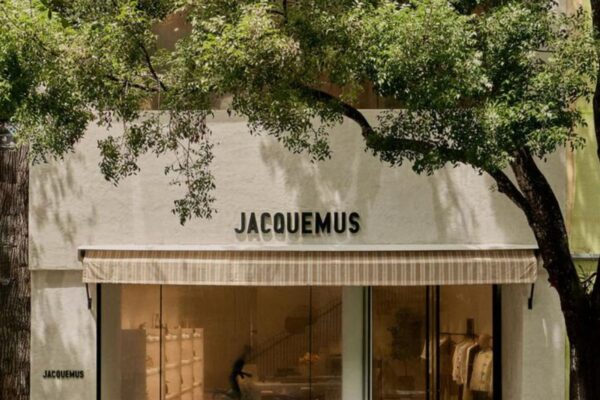
Jacquemus in Miami: flagship of the Design District
Jacquemus Miami gives a new address to the brand's Mediterranean universe…
 Fashion
Artycapucines
Artycapucines Louis Vuitton explores the encounter between a recognizable bag, the gaze…